Case Record
The following record has been compiled from the available account associated with this case.
Cicada 3301: The Internet's Most Mysterious Recruitment Puzzle
On January 4, 2012, an image appeared on 4chan.
It was not particularly impressive.
There was no elaborate artwork.
No mysterious photograph.
No dramatic video.
Just white text against a black background.
The message read:
"Hello. We are looking for highly intelligent individuals. To find them, we have devised a test."
There was supposedly a message hidden inside the image.
Anyone capable of finding it would be led to the next stage.
The message continued:
"We look forward to meeting the few that will make it all the way through."
At the bottom was a number.
3301.
No company name.
No organization.
No explanation.
No prize.
No job title.
No indication of what would happen to anyone who reached the end.
Only a test.
At first glance, it looked like exactly the kind of thing that appears on anonymous internet forums every day.
A prank.
An amateur puzzle.
A viral marketing campaign.
Someone trying to lure bored internet users into an elaborate joke.
Then people began solving it.
Inside the image was hidden information.
That information led to another clue.
Then another.
The trail moved through classical cryptography.
Steganography.
Book ciphers.
Internet forums.
Telephone numbers.
Digital audio.
Tor hidden services.
Ancient literature.
Philosophy.
Runes.
And cryptographic signatures used to distinguish genuine Cicada messages from impostors.
Then the puzzle did something that changed its character completely.
It left the internet.
Solvers discovered geographic coordinates.
People traveled to them.
In cities around the world, they found physical posters bearing the image of a cicada and QR codes leading to additional clues.
Warsaw.
Paris.
Sydney.
Seoul.
American cities.
Someone had apparently arranged for clues to be physically placed across several countries before the puzzle began.
The mystery suddenly became much more expensive.
Much more coordinated.
And much harder to dismiss as one bored person sitting behind a computer.
A limited number of participants eventually reached private stages of the puzzle.
Then the trail closed.
A year later, Cicada returned.
Another puzzle began.
Again, participants were tested.
Again, the puzzle crossed between the internet and the physical world.
Again, people apparently reached private stages.
Then came a third major puzzle in 2014.
This time the path eventually led to one of the strangest artifacts in internet history.
A collection of pages written primarily in runes.
Its title:
Liber Primus.
The First Book.
Parts of it were deciphered.
Much of it was not.
Years passed.
Cicada occasionally resurfaced with cryptographically authenticated messages.
Then, in April 2017, came what remains the last widely accepted signed communication.
It warned people:
"Beware false paths."
And then Cicada 3301 disappeared.
No intelligence agency has admitted responsibility.
No corporation has revealed a marketing campaign.
No game studio has stepped forward to announce that the entire thing was promotional.
No verified founder has published the definitive explanation.
Some people who claimed to reach the end described an organization interested in privacy, cryptography, censorship resistance, and the development of privacy tools.
Others suspected intelligence recruitment.
A decentralized cryptographic collective.
Hackers.
Cybersecurity professionals.
An ideological organization.
An alternate reality game.
A cult.
A group of extraordinarily committed puzzle designers.
Or some combination of several of those possibilities.
More than a decade after that first black image appeared on 4chan, one basic question remains unanswered.
Who was Cicada 3301?
January 4, 2012
The first confirmed Cicada puzzle appeared on January 4, 2012.
The image was posted anonymously on 4chan.
Accounts differ over which board preserves the original posting in surviving reconstructions, with archives commonly associating the puzzle with either /b/ or /x/, but the content of the image is well preserved.
The challenge was explicit.
Cicada was supposedly recruiting.
Not entertaining.
Not advertising.
Recruiting.
It wanted:
"highly intelligent individuals."
That immediately raised an important question.
Recruiting them for what?
No answer was provided.
Instead, anyone curious enough to continue had to prove themselves first.
The Message Hidden Inside the Image
The first clue established one of Cicada's recurring techniques.
Steganography.
Cryptography hides the meaning of a message.
Steganography attempts to hide the fact that a message exists at all.
A photograph can appear completely ordinary while additional information is concealed inside its digital structure.
Text can be embedded within image data.
Information can be hidden in seemingly insignificant bits.
To a normal viewer, nothing appears unusual.
To someone who knows what to examine, the file contains another layer.
Cicada's opening message told participants exactly what to expect:
"There is a message hidden in this image."
The challenge was figuring out how to extract it.
Solvers soon began examining the file rather than simply looking at the picture.
That distinction became fundamental to Cicada.
The visible clue was rarely the entire clue.
Sometimes the interesting part was what the file was hiding.
Caesar
One of the early puzzle stages contained a clue pointing toward a Caesar cipher.
The Caesar cipher is among the oldest and simplest forms of substitution cipher.
Letters are shifted by a fixed number of positions through the alphabet.
A becomes another letter.
B becomes another.
And so on.
The technique is named for Julius Caesar, who is traditionally associated with using substitution methods for military communication.
By modern cryptographic standards, a Caesar cipher is trivial.
That was probably the point.
Cicada did not begin by demanding advanced number theory.
It began by testing whether participants recognized what kind of puzzle they were looking at.
Solve the shift.
Follow the link.
Find the next clue.
The rabbit hole opened gradually.
The Duck
One early solution led participants to an image of a duck.
The image contained text.
It appeared to tell solvers they had gone the wrong way.
A decoy.
The wording included a joke involving the word guess.
Or, more importantly:
outguess.
OutGuess is a steganography program.
The apparent dead end was actually another instruction.
Run the file through the correct tool and additional information appeared.
This became characteristic of Cicada's puzzle design.
A clue might work at several levels simultaneously.
The image mattered.
The text mattered.
A particular word mattered.
The digital file mattered.
And sometimes the thing telling you that you had failed was the thing telling you exactly how to continue.
Nothing Was Accidental
Successful Cicada solvers learned very quickly not to ignore details.
Capitalization could matter.
File metadata could matter.
Image dimensions could matter.
Numbers could matter.
A typo could be intentional.
A strange phrase could reference a book.
A poem might function as an instruction.
An image could contain several completely separate pieces of information.
Participants could not merely solve puzzles.
They had to identify what kind of puzzle had been presented.
That is often harder.
If someone hands you a Caesar cipher and tells you it is a Caesar cipher, decoding it is straightforward.
If someone hands you an apparently normal JPEG and says nothing, the number of possible approaches becomes enormous.
Cicada repeatedly exploited that uncertainty.
The Cicada Appears
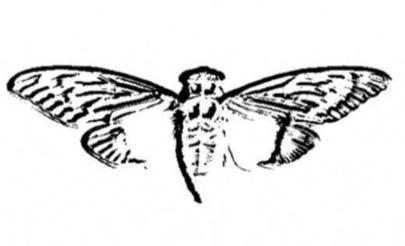
As the puzzle progressed, participants encountered the image that would become synonymous with the mystery.
A cicada.
The insect was eventually adopted by observers as the unofficial symbol of the organization.
The name Cicada 3301 itself is largely a public label.
The messages generally signed themselves with the number:
3301.
Why 3301?
Nobody knows.
It could possess mathematical significance.
It could be an internal identifier.
A symbolic number.
A reference understood only by the creators.
Or simply a number chosen because it sounded cryptic.
People have spent years looking for deeper significance.
That is what happens when an anonymous organization gives the internet a number.
Eventually someone will factor it.
3301 Is Prime
The number 3301 happens to be prime.
It is divisible only by one and itself.
That naturally attracted interest from puzzle solvers.
Prime numbers are fundamental to modern cryptography.
Public-key cryptographic systems frequently depend upon difficult mathematical problems involving large primes.
Was that why the group chose 3301?
Possibly.
But the fact that a mysterious cryptography organization chose a prime number does not establish why that particular prime was selected.
The number has generated numerous theories.
None has been conclusively confirmed.
Like almost everything else about Cicada, even the name became another puzzle.
The Subreddit
The early 2012 trail eventually led solvers to a strange subreddit.
Its name itself appeared meaningless.
Posts contained encoded material.
Numbers.
Symbols.
Images.
References.
The puzzle had now moved beyond a single file.
Participants needed to follow information across different parts of the web.
The subreddit introduced another major Cicada characteristic.
Literature.
The Book Cipher
A book cipher uses a specific text as the key to another message.
Instead of substituting letters directly, numbers can point to pages, lines, words, or letters within a book.
Without knowing which text serves as the key, the cipher may be extremely difficult to solve.
Cicada repeatedly used literary references to guide solvers toward the correct sources.
One early sequence involved "The Lady of Shalott," the poem by Alfred, Lord Tennyson.
But Cicada's literary interests did not stop with Victorian poetry.
Later puzzles would draw from philosophy.
Mysticism.
Occult writing.
Medieval literature.
William Blake.
Ralph Waldo Emerson.
Aleister Crowley.
And other sources.
The intended solver apparently needed more than technical skill.
They needed cultural literacy.
Or at least the ability to recognize when Google was about to become extremely important.
Why Literature?
Cicada could easily have built its entire test from mathematics and programming.
It did not.
Its puzzles repeatedly incorporated literature, philosophy, art, music, and esoteric symbolism.
That may tell us something about the people designing them.
They were not merely testing whether someone could break a cipher.
They appeared interested in a particular kind of mind.
Someone comfortable moving between disciplines.
A programmer who could recognize poetry.
A cryptographer willing to study philosophy.
A puzzle solver capable of learning unfamiliar tools quickly.
The challenge was not:
Do you already know everything?
It was closer to:
Can you figure out what you need to know next?
The Telephone Number
Eventually, solvers uncovered a telephone number.
Calling it produced a recorded message.
This was another escalation.
The puzzle had escaped image files and internet forums.
The recorded message instructed participants to use information they had already encountered.
The exact sequence has been reconstructed extensively by solver communities, but the important point is simpler.
Cicada expected participants to combine earlier clues rather than treat each challenge independently.
Numbers from previous stages suddenly mattered again.
The puzzle possessed continuity.
Someone had designed a path.
And then the telephone recording told solvers to return to the internet.
A Website and a Countdown
Solvers eventually reached a website associated with the puzzle.
A countdown appeared.
When the timer expired, something new was revealed.
Not another encrypted paragraph.
Not another poem.
Coordinates.
Latitude.
Longitude.
Multiple geographic locations.
The puzzle had become physical.
The Coordinates
The coordinates pointed to locations in several countries.
Reports from the 2012 challenge document clues appearing in cities including locations in the United States, Europe, Asia, and Australia.
Among places associated with the physical-clue stage were:
Warsaw.
Paris.
Sydney.
Seoul.
Seattle.
Miami.
New Orleans.
Los Angeles.
Dallas.
Portland.
Annapolis.
And additional locations.
Participants living nearby traveled to investigate.
What they found confirmed that the puzzle had been prepared in advance.
Physical posters had been placed in public locations.
On them was the cicada.
And a QR code.
This Changed Everything
Until the coordinates appeared, Cicada could theoretically have been created by one talented person.
An obsessive programmer.
A cryptography enthusiast.
Someone with a lot of free time.
The international posters made that explanation considerably more complicated.
Someone had physically placed material in multiple countries.
Possibilities included:
A group with members around the world.
One person coordinating volunteers.
Paid contractors.
People recruited without being told the larger purpose.
A preexisting international organization.
Or an extremely committed traveler with a truly unreasonable January itinerary.
Whatever the explanation, the physical clues required planning.
This was no longer merely an online puzzle.
Someone had infrastructure.
Why Physical Clues?
The posters also served another purpose.
They tested participants in a way online puzzles could not.
A solver in Poland might need someone in Australia.
Someone in the United States might reach a clue near Paris.
No individual could easily retrieve every physical clue.
Participants had to cooperate.
Communities formed.
Information was shared.
Images of posters were uploaded.
Solutions spread through IRC channels, forums, wikis, and collaborative documents.
For a puzzle supposedly designed to identify exceptional individuals, that cooperation created an interesting problem.
Cicada noticed.
"We Want the Best, Not the Followers"
As groups collectively solved the puzzle, some participants began reaching later stages faster than they could have alone.
Eventually, a hidden service accessible through Tor reportedly became available.
Tor allows users to access both ordinary websites and .onion services while obscuring network routing through layers of encryption.
It was a natural environment for an organization obsessed with anonymity.
But Cicada apparently did not want unlimited crowds arriving at the end.
After enough people reached one private stage, access closed.
A message indicated that the organization wanted people capable of solving the challenge themselves.
The wording has been preserved in slightly varying versions, commonly remembered as:
"We want the best, not the followers."
The collaboration that helped solve Cicada may also have disqualified many of the people collaborating.
That was a wonderfully cruel design choice.
The Finalists
A small number of participants reportedly reached private stages of the 2012 puzzle.
Exactly how many is uncertain.
Accounts commonly suggest somewhere around a few dozen or fewer.
These people were reportedly contacted privately.
Some later claimed they were asked questions.
Others said they were given additional tasks.
But this is where documentation becomes much weaker.
The public puzzle can be reconstructed from archived material.
Private communications cannot.
Once participants crossed the final public threshold, outsiders had to rely on what those individuals later said.
And according to some accounts, they were specifically asked not to discuss what happened.
What Did Cicada Want?
The most important surviving clue may come from messages allegedly received by successful participants.
Accounts published by journalists and solver communities describe Cicada as presenting itself as an international group united around several principles.
Privacy.
Freedom of information.
Opposition to censorship.
Opposition to tyranny.
The organization reportedly claimed it did not maintain a conventional public identity.
No normal membership roster.
No public-facing website.
No desire for publicity.
Participants were supposedly being recruited because they had demonstrated the skills and values the group wanted.
If authentic, these messages make Cicada sound less like an intelligence agency and more like a loosely organized cryptographic or cypherpunk collective.
But there is a problem.
The private messages cannot all be independently authenticated to the same standard as Cicada's signed public communications.
They are valuable evidence.
They are not definitive proof.
The First Puzzle Ends
By early 2012, the public trail effectively ended.
Some people had apparently advanced beyond it.
Most had not.
The identity of the organizers remained hidden.
There was no product launch.
No movie trailer.
No new video game.
No television program.
No corporate reveal.
Nothing happened that explained why so much effort had been spent creating the challenge.
The internet waited.
If Cicada had been a one-time event, it might have become a fascinating footnote.
Then January arrived again.
January 2013
On January 4, 2013, almost exactly one year after the original challenge, Cicada returned.
A new message appeared.
The opening was familiar.
"Hello again."
The search for intelligent individuals was continuing.
That simple phrase established something important.
2012 had not been an isolated prank.
Someone had maintained the identity for a year.
The second puzzle was deliberate.
The pattern was forming.
Authentication Becomes Essential
By this point, Cicada had become famous enough to attract imitators.
Anyone could create a black image.
Anyone could paste a cicada onto it.
Anyone could write:
3301
at the bottom.
The organization needed a way to distinguish genuine clues from fakes.
The answer was public-key cryptography.
PGP
Cicada used PGP signatures to authenticate messages.
PGP—Pretty Good Privacy—allows a person to digitally sign data using a private cryptographic key.
Anyone possessing the corresponding public key can verify that the signature was created by whoever controls the private key.
This does not reveal the person's identity.
That distinction is perfect for Cicada.
The group could prove:
This message comes from the same cryptographic identity that produced previous messages.
Without proving:
Here is the person behind it.
Cicada could remain anonymous and still establish continuity.
That was crucial.
The Cicada Key
The public key associated with Cicada became one of the most important artifacts in the case.
Messages signed with the established key could be treated as authentic within the puzzle's internal chain of identity.
Unsigned messages could not.
This created a strange form of reputation.
Nobody knew who Cicada was.
But cryptographically, people could know when Cicada was speaking.
The person remained unknown.
The key became the identity.
That is an almost perfect expression of the privacy philosophy Cicada supposedly believed in.
The Second Puzzle
The 2013 challenge once again involved multiple layers.
Cryptography.
Steganography.
Digital files.
Literary references.
Physical locations.
Tor.
But the designers did not simply repeat the first puzzle.
They introduced new techniques.
Solvers encountered audio.
Encoded information hidden through sound.
Bootable software.
Runic systems.
And increasingly elaborate philosophical material.
The puzzle was becoming less like a scavenger hunt.
And more like an entire worldview encoded as a test.
Audio as Data
Digital audio can hide information in ways that are not obvious when simply listening.
A sound file can be examined spectrographically.
Instead of treating sound only as something heard, software can visualize its frequency content.
Images can be embedded within that representation.
Text can appear.
Patterns become visible.
Cicada used techniques such as these to force participants to inspect media in unconventional ways.
Again, the lesson was consistent.
Do not merely consume the file in the normal way.
Inspect it.
Transform it.
Look beneath it.
Cicada OS
One of the stranger artifacts associated with the 2013 puzzle was a bootable Linux-based environment generally referred to as Cicada OS.
Participants encountered an ISO image capable of being loaded as an operating-system environment.
That was another significant jump in technical sophistication.
Creating an image is easy.
Building a functioning bootable environment requires considerably more preparation.
Cicada was testing whether participants were comfortable handling unfamiliar software.
And perhaps whether they were willing to boot mysterious files obtained from anonymous cryptographers on the internet.
Which is not normally advice Forbidden Lore recommends as a general cybersecurity practice.
Gematria Primus
The second puzzle introduced one of the most important systems in the entire mystery.
A runic alphabet became associated with Cicada.
It would later be known as Gematria Primus.
The system used symbols based heavily on historical runic characters.
But Cicada's version assigned values and cryptographic significance according to its own design.
This was not simply decoration.
The runes became a full encoding system.
And they would eventually form the language of Cicada's most famous unsolved artifact.
Liber Primus.
Why Runes?
Runes are visually perfect for a mysterious organization.
They look ancient.
Esoteric.
Secret.
But Cicada generally did not use them as mere atmospheric decoration.
The symbols had structure.
Values.
Rules.
The puzzle designers expected participants to understand that system and perform transformations using it.
Once again, Cicada combined imagery associated with mysticism with rigorous technical puzzles.
The aesthetic suggested occultism.
The mechanism was mathematics.
The Philosophy Becomes Clearer
The texts referenced throughout Cicada's puzzles were not random.
A pattern emerged.
Individualism.
Self-reliance.
Privacy.
Freedom.
Knowledge.
Enlightenment.
Resistance to authority.
Personal transformation.
Cicada repeatedly directed solvers toward writings that could be interpreted through those themes.
This contributed to the theory that the puzzles were ideological recruitment rather than simple intelligence testing.
The organization might not merely want clever people.
It might want clever people who arrived at particular philosophical conclusions.
January 2014
On January 4, 2014, Cicada returned for a third major puzzle.
This time, its reputation preceded it.
Thousands of people were waiting.
Journalists were watching.
Puzzle communities were prepared.
The internet knew what January meant.
Cicada responded with another cryptic message:
"Hello. Epiphany is upon you. Your pilgrimage has begun. Enlightenment awaits."
The language had changed.
This was no longer merely:
We are looking for intelligent individuals.
Now it sounded almost religious.
Pilgrimage.
Epiphany.
Enlightenment.
Cicada had always been mysterious.
In 2014, it became philosophical.
Ralph Waldo Emerson
One early 2014 sequence used a poem-like clue to point solvers toward Ralph Waldo Emerson.
Specifically:
"Self-Reliance."
The essay's themes fit Cicada almost absurdly well.
Individual thought.
Resistance to conformity.
Trust in oneself.
Intellectual independence.
A book cipher using Self-Reliance led toward another hidden service.
The puzzle was not merely borrowing literature because the texts contained enough words to use as keys.
The texts themselves seemed to express the ideology behind the challenge.
Or at least an ideology the designers wanted participants to think about.
The Pilgrimage
The word pilgrimage became increasingly appropriate.
By 2014, participants were no longer simply breaking codes.
They were following a path constructed from cryptography and philosophy.
The puzzles demanded patience.
Technical skill.
Research.
Cooperation.
Independence.
And an unusual willingness to spend enormous amounts of time staring at runes posted by strangers.
At the end of the trail was not money.
Not fame.
Not even a clearly defined victory condition.
The reward was access to the next clue.
Cicada's greatest motivational trick was convincing thousands of people that the mystery itself was sufficient payment.
Liber Primus
Eventually the 2014 puzzle produced the artifact that still defines Cicada 3301.
A book.
Or something designed to resemble one.
Liber Primus.
Latin:
The First Book.
Its pages were filled primarily with the runic alphabet associated with Gematria Primus.
Decorative images accompanied sections.
Some pages contained symbols.
Others looked almost like illuminated manuscripts produced by cryptographers.
The writing discussed philosophical ideas.
Self-knowledge.
Transformation.
Truth.
The nature of information.
The path of the seeker.
But only if you could read it.
A Book Nobody Could Fully Read
Sections of Liber Primus were deciphered.
Others resisted.
That remains true.
Solver communities have spent years transcribing the runes.
Testing mathematical transformations.
Studying prime numbers.
Analyzing page structures.
Comparing solved and unsolved sections.
Building software.
Searching for patterns.
Trying different cryptographic assumptions.
Yet substantial portions of the book remain unsolved.
This is the central surviving Cicada puzzle.
The organization disappeared.
The book did not.
What Does the Solved Material Say?
The deciphered portions of Liber Primus are strange.
They are not straightforward instructions from an employer.
They read more like philosophical or initiatory writing.
The reader is encouraged to question.
To seek truth.
To reject false certainty.
To know oneself.
To recognize information as something with profound significance.
Some passages appear deliberately mystical.
Others resemble manifestos.
The tone has caused people to describe Cicada as everything from a philosophical society to a cult.
But the writings do not establish either conclusion.
People can write dramatically without founding a religion.
Cryptographers are allowed to be theatrical.
Cicada certainly was.
The Deep Web Is Not the Dark Web
Cicada's use of Tor also helped produce sensational reporting.
The phrase dark web attracts attention.
But Tor itself is simply an anonymity network.
It can be used for illegal markets.
It can also be used by journalists.
Political dissidents.
Privacy advocates.
Researchers.
Whistleblowers.
Ordinary people.
And mysterious puzzle organizations.
Cicada's use of .onion sites was entirely consistent with its apparent emphasis on privacy.
It was also useful operationally.
A Tor hidden service allowed the group to publish content without exposing an ordinary server location.
Whoever designed the puzzle understood anonymity tools.
Was Cicada an ARG?
One of the earliest explanations was that Cicada 3301 was an alternate reality game.
ARGs intentionally blur fiction and reality.
Players solve puzzles.
Websites contain clues.
Telephone numbers may be involved.
Physical locations can matter.
Characters interact with players.
Companies have used ARGs to promote films, television shows, games, and products.
Cicada certainly looked like one.
There was just one problem.
ARGs usually reveal what they are advertising.
Cicada never did.
The Marketing Problem
A marketing campaign has an objective.
Attention.
Cicada received enormous attention.
If the campaign existed to promote something, 2012 would have been an excellent time to reveal it.
Or 2013.
Or 2014.
Nothing happened.
No company announced:
Congratulations. You have all been solving promotional puzzles for our new cyberpunk video game.
No studio revealed a film.
No technology company claimed credit.
No publisher unveiled a novel.
The publicity had tremendous potential commercial value.
Nobody collected it.
That makes ordinary viral marketing one of the weaker explanations.
Was It an Intelligence Agency?
The most famous theory is also the most obvious.
Recruiting intelligent people through difficult cryptographic puzzles sounds exactly like something an intelligence agency might do.
Agencies really have used puzzle competitions for recruitment.
Britain's GCHQ has publicly released cryptographic challenges.
Intelligence organizations need mathematicians.
Programmers.
Cryptographers.
Security researchers.
People capable of solving unusual problems.
Cicada seemed to be searching for exactly those people.
Perhaps 3301 was the NSA.
CIA.
GCHQ.
Another national intelligence service.
Or a contractor acting on behalf of one.
The 4chan Problem
There is an immediate difficulty with the intelligence-agency theory.
Why recruit through anonymous posts on 4chan?
An intelligence agency wants brilliant cryptographers.
It also generally wants people capable of passing security clearances.
Anonymous worldwide recruitment creates obvious problems.
Participants might live in hostile countries.
They might have criminal histories.
They might already work for rival intelligence services.
They might be teenagers.
They might be intelligence officers themselves.
They might be extremely talented but completely unsuitable for classified work.
An agency could still use the puzzle as an initial filter.
But there are much easier ways to recruit technically talented people.
Universities exist.
So do job applications.
The International Posters Make Intelligence More Plausible
On the other hand, an intelligence organization would have no difficulty arranging physical clues in several countries.
It would possess technical expertise.
Money.
Personnel.
Secure communication systems.
Operational discipline.
Cryptographers.
And an institutional appreciation for theatrical secrecy.
The theory fits the resources.
It fits the skills being tested.
It fits the anonymity.
But no documentary evidence has established it.
No former intelligence official has credibly produced records showing:
Project CICADA 3301 recruitment initiative.
Until that happens, the theory remains attractive speculation.
Was It the NSA?
The NSA is particularly popular.
For obvious reasons.
Cryptography is central to the agency's mission.
The organization employs elite mathematicians and computer scientists.
Cicada appeared to recruit people with precisely those skills.
But the NSA theory encounters the same evidentiary problem as every other government theory.
There is no proof.
The fact that an organization could have created Cicada does not establish that it did.
By that standard, several universities, security companies, intelligence agencies, hacker groups, and wealthy eccentric cryptographers qualify.
Capability is not identity.
The CIA Theory
The CIA appears frequently in popular discussions because mysteries eventually attract the CIA whether the CIA wants them or not.
Cicada's international physical infrastructure could theoretically fit an organization with global reach.
But much of the puzzle's technical emphasis is less directly aligned with conventional human-intelligence recruitment than with cryptography and cybersecurity.
That does not eliminate intelligence involvement.
It simply means the theory usually begins with:
Secret organization equals CIA.
That is not particularly strong reasoning.
Was It a Hacker Collective?
A decentralized hacker or cryptography collective may fit the evidence better.
Such a group could genuinely care about:
Privacy.
Encryption.
Censorship resistance.
Anonymous communication.
Software development.
Internet freedom.
Members located around the world could place physical posters locally.
No enormous budget would be required.
Someone in Warsaw places one poster.
Someone in Sydney places another.
Someone in Seattle places another.
Coordination becomes easy.
That model explains the international clues without requiring intelligence-agency resources.
It also aligns with the ideology described by alleged finalists.
The Cypherpunk Connection
Cicada's philosophy resembles aspects of cypherpunk thought.
Cypherpunks argue that strong cryptography can protect personal privacy and freedom against surveillance and coercion.
During the 1990s, cryptographers, programmers, activists, and privacy advocates discussed anonymous digital cash, encryption, remailers, censorship resistance, and the political consequences of cryptographic technology.
Many ideas that once sounded radical eventually became ordinary components of modern digital life.
Encrypted messaging.
Cryptocurrency.
Tor.
Anonymous publishing.
Cicada emerged from an internet already shaped by those ideas.
A privacy-oriented cryptographic collective would therefore not have appeared from nowhere.
Was Cicada Anonymous?
The hacktivist collective Anonymous has inevitably been proposed.
Both operated through anonymous internet culture.
Both attracted technically skilled participants.
Both used imagery and mystery.
But there is no strong evidence linking Cicada 3301 directly to Anonymous.
Their styles are also quite different.
Anonymous generally became famous through public actions.
Operations.
Protests.
Leaks.
Attacks.
Political campaigns.
Cicada avoided public claims.
It did not advertise victories.
It did not appear interested in mass membership.
If anything, it actively excluded followers.
Was Cicada a Cult?
Liber Primus made this theory inevitable.
Secret group.
Recruitment tests.
Initiatory language.
Pilgrimage.
Enlightenment.
Private membership.
Philosophical writings.
That is enough for someone eventually to say:
cult.
But the evidence is weak.
No verified leader has been identified.
No compound.
No demands for money.
No known religious doctrine.
No documented coercive structure.
No evidence of members surrendering their lives to a charismatic authority.
Calling anything secretive and philosophical a cult makes the word nearly meaningless.
Cicada may have been strange.
That is not the same thing.
Was It a Secret Society?
This description fits slightly better.
A private group screening prospective members through initiation is hardly unprecedented.
Fraternal societies.
Esoteric organizations.
Academic societies.
Political groups.
Intellectual circles.
Secret societies have existed for centuries.
Cicada could be understood as an internet-age version.
Replace the hidden lodge with Tor.
Replace the coded handshake with PGP.
Replace the initiation ceremony with steganography.
The technology changes.
The structure is ancient.
The Problem With the "Official" Cicada Websites
Over the years, numerous websites have claimed association with Cicada 3301.
Some present themselves as official successors.
Others sell products.
Others make philosophical claims.
Some use the imagery.
Some claim institutional continuity.
The problem is authentication.
Cicada created an unusually strong method for verifying itself.
Its cryptographic key.
If a modern claim cannot establish continuity with the original signed identity, the claim should not automatically be accepted because it uses a cicada logo.
Anyone can register a domain.
Anyone can call themselves 3301.
PGP is much harder to imitate.
Copycats
Copycats became inevitable almost immediately.
Cicada was famous.
Its format was easy to imitate superficially.
Create a mysterious image.
Hide some data.
Add a cipher.
Mention enlightenment.
Sign it:
Suddenly another Cicada puzzle exists.
Except it does not.
This became such a significant problem that later authenticated Cicada messages explicitly warned participants about false paths.
Why PGP Matters So Much
Imagine someone today posts:
CICADA HAS RETURNED.
Without a valid signature from the established Cicada key, there is no reliable reason to believe them.
The cryptographic signature is one of the best elements of the entire mystery.
Usually, anonymous internet mysteries suffer because anyone can impersonate the central figure.
Cicada anticipated the problem.
Its creators essentially said:
You do not need to know our names.
You only need to know our key.
That makes the mystery unusually resistant to identity theft.
2015
January 2015 arrived.
People waited.
The pattern seemed obvious.
Every January, Cicada returned.
Then:
Nothing.
No major authenticated fourth puzzle appeared.
This was unexpectedly effective.
Cicada had trained the internet to expect it.
Then it refused to perform.
Was the Third Puzzle Never Finished?
One possibility is simple.
Cicada did not release another puzzle because the 2014 puzzle was still active.
Liber Primus remained unsolved.
Why provide a fourth challenge when participants had not completed the third?
This interpretation gained support from later authenticated communications.
The book mattered.
The path was still there.
Participants simply had not finished walking it.
The 2016 Message
In January 2016, an authenticated message associated with Cicada appeared.
Its significance was straightforward.
Participants were directed back toward Liber Primus.
The implication was almost insulting in its simplicity.
Stop looking for a new puzzle.
You still have not solved the old one.
The message reinforced the idea that the book contained unresolved stages of the intended path.
Cicada had not necessarily abandoned the game.
The internet had stalled.
Liber Primus Remains the Wall
This is one reason the Cicada mystery remains unusually compelling.
Most internet puzzles are either solved or abandoned.
Liber Primus occupies a middle state.
It exists.
It has structure.
Parts have been solved.
The same methods do not simply unlock everything else.
There is every reason to believe additional meaning is encoded there.
But nobody has publicly demonstrated a complete solution.
The door is visible.
The key is missing.
Is Liber Primus Actually Solvable?
Almost certainly, at least in principle.
The solved sections demonstrate intentional construction.
The runes are not random decoration.
Cryptographic transformations produce meaningful plaintext in some portions.
That strongly suggests the remaining sections were also created deliberately.
But whether solvers currently possess all required information is uncertain.
Perhaps the necessary key is hidden elsewhere.
Perhaps a clue was missed years ago.
Perhaps the puzzle requires a physical object no longer available.
Perhaps it depends on contextual knowledge only finalists received.
Or perhaps the correct technique simply has not been discovered.
A puzzle can remain unsolved without being impossible.
The 2017 Warning
In April 2017, a message authenticated through Cicada's established cryptographic identity appeared.
Its central warning was memorable:
"Beware false paths."
Participants were advised to verify signatures.
Unsigned puzzles were not to be trusted.
This is widely regarded by solver communities as the last verified public communication from the original Cicada identity.
After years of imitators, the group had effectively issued its own anti-counterfeiting notice.
Then it went silent.
Silence
As of 2026, no subsequent public puzzle has achieved broad acceptance among long-running Cicada solver communities as a new authenticated challenge from the original organization.
There have been claims.
Websites.
Videos.
Accounts.
Supposed successors.
"Official" projects.
But the original cryptographic chain remains the standard.
No signature.
No Cicada.
The silence is now longer than the active public phase of the mystery itself.
What Happened to the Private Key?
If Cicada still exists, whoever controls its private key could theoretically authenticate another message.
If the key has been lost, the original identity may be impossible to revive securely.
If the creators deliberately destroyed it, the silence may be permanent.
If the people behind Cicada are dead, inactive, divided, or simply finished, the public may never know.
The key solved one identity problem.
It created another.
A cryptographic identity can prove continuity.
It cannot explain why continuity stopped.
The People Who Reached the End
Perhaps the greatest mystery is what happened to the successful solvers.
Several individuals have publicly described reaching advanced stages.
One of the best-known is Swedish computer analyst Joel Eriksson, whose experience has been extensively discussed in media coverage.
He reportedly solved substantial portions of the puzzle but reached certain stages too late to be included among the earliest successful participants.
Others claimed deeper involvement.
Some alleged finalists said Cicada eventually invited them into private communication channels.
This is where the story becomes both fascinating and frustrating.
The people most capable of answering what Cicada wanted are also the people whose stories are hardest to verify.
The Leaked Recruitment Message
A message attributed to successful 2012 participants has circulated for years.
According to the account, Cicada finally explained itself.
It supposedly described an international organization without a conventional public identity.
Members shared beliefs including opposition to censorship and support for privacy.
Participants were reportedly told they had been selected because their puzzle performance demonstrated both ability and compatible thinking.
If genuine, this may be the closest anyone has come to obtaining Cicada's own explanation.
But because the message emerged from private finalist communications, verification is incomplete.
The puzzle's greatest answer arrived in a form impossible for outsiders to authenticate perfectly.
Which is, appropriately, very Cicada.
The Software Project
Some people claiming to have reached Cicada's private stages said recruits were asked to work on privacy-oriented software.
One project reportedly involved creating a system for secure or censorship-resistant communication.
This would align closely with the ideological themes embedded throughout the puzzles.
If true, the recruitment process becomes logical.
Cicada did not need ordinary employees.
It wanted people who:
Understood cryptography.
Could code.
Cared about privacy.
Could work independently.
Knew anonymity tools.
And had demonstrated extraordinary persistence.
The puzzle was the résumé.
Then It Fell Apart
Accounts from alleged insiders suggest the private collaboration may not have developed as smoothly as the public puzzle.
Participants were strangers.
Coordination was difficult.
People had different levels of commitment.
The mysterious organization apparently did not suddenly reveal a giant underground headquarters.
There may have been nothing more glamorous than private servers and people writing code.
If those accounts are correct, the ending is wonderfully mundane.
Thousands of people imagined the NSA.
A secret society.
International espionage.
An occult cryptography order.
The winners may have received a software-development group project.
Every mystery eventually risks becoming a meeting.
Can We Trust the Winners?
Caution is necessary.
Anyone can claim to have solved Cicada.
The prestige attached to the mystery gives people incentives to exaggerate involvement.
Some participants have stronger documentation than others.
Statements from several independent solvers may reinforce one another.
But there has never been a complete authenticated archive of everything that happened after the public puzzle.
That means the final stages remain partially dependent upon testimony.
Exactly like many older mysteries.
The technology changed.
The evidence problem did not.
Why Would Winners Stay Silent?
If finalists really learned Cicada's identity, why has nobody exposed it?
Several explanations are possible.
They never learned the real identities of the organizers.
The group communicated anonymously even with recruits.
Participants agreed to confidentiality.
They respected the project.
They had little useful information to reveal.
The people who know simply have not spoken publicly.
Or the claimed private recruitment stories are incomplete or false.
It is entirely possible to join an anonymous organization without ever knowing who created it.
Cicada may have compartmentalized itself deliberately.
Could One Person Have Created Cicada?
The international posters are the strongest argument against a completely solitary operation.
But they do not prove a large organization.
One central organizer could have coordinated people in different cities.
Those participants might not even have known what they were contributing to.
Imagine being contacted online and asked:
Print this QR code.
Tape it to this pole.
Send confirmation.
For a technically sophisticated organizer, coordinating fourteen locations would not require fourteen full members of a secret society.
It would require fourteen people willing to follow instructions.
Still, the puzzle's sustained technical complexity suggests more than casual effort.
The Skills Behind Cicada
Whoever created Cicada understood an unusually broad collection of subjects.
Cryptography.
Steganography.
Programming.
Linux.
Tor.
PGP.
Classical ciphers.
Literature.
Philosophy.
Runes.
Audio analysis.
Web infrastructure.
Puzzle design.
Operational security.
And human motivation.
No single skill is extraordinary by itself.
The combination is.
That does not require a government agency.
But it does suggest the puzzle was created by people who knew exactly what they were doing.
Operational Security
The creators also demonstrated impressive restraint.
They did not accidentally reveal themselves through an obvious public mistake.
At least no mistake has produced a universally accepted identity.
This is remarkable.
Internet investigations have identified anonymous criminals from tiny errors.
Metadata.
Usernames.
Server configurations.
Writing patterns.
Reused email addresses.
Time zones.
Payment trails.
Cicada operated publicly enough to become internationally famous.
Yet its creators remained unconfirmed.
Either investigators missed the trail.
Or the people behind Cicada understood operational security very well.
Stylometry
One possible approach to identifying anonymous authors is stylometry.
Writing patterns can reveal characteristics of authorship.
Word choice.
Sentence structure.
Punctuation.
Repeated phrases.
Spelling.
Cicada's messages provide some material for analysis.
But the sample is limited.
The group may have used multiple writers.
Texts may have been edited collaboratively.
Puzzle language may have been intentionally stylized.
And even if a linguistic profile could be established, investigators would still need a known author for comparison.
Stylometry can suggest.
It rarely produces a driver's license.
Metadata
Digital files often contain hidden information creators forget to remove.
Camera models.
Software names.
Creation dates.
GPS data.
Usernames.
File paths.
Cicada participants routinely examined metadata because the puzzle itself taught them to do so.
If the designers left something behind, solvers assumed it was probably a clue.
That creates an unusual problem for forensic investigation.
Accidental metadata and intentional metadata become difficult to distinguish.
Cicada weaponized the very artifacts investigators would normally use to identify anonymous creators.
Everything suspicious might simply be another puzzle.
What If the Mystery Was the Product?
There is another possibility.
Perhaps Cicada never needed a final purpose.
Perhaps creating the puzzle was itself the purpose.
Artists create elaborate installations.
Puzzle designers create puzzles.
Programmers build unnecessary things because they are interesting.
Musicians compose works without intending to recruit employees.
Cicada may have been an experiment in collaborative intelligence.
Or an art project about secrecy and information.
Or a deliberately constructed modern myth.
The creators may have wanted to see what the internet would do with an unexplained signal.
If so, the experiment succeeded spectacularly.
An Internet Myth Built in Real Time
Most folklore reaches us after generations of retelling.
Cicada is different.
We can watch the mythology form.
2012:
A recruitment puzzle.
Then:
NSA.
CIA.
MI6.
Hackers.
Cult.
Secret society.
Cryptographers.
Whistleblowers.
Anonymous.
A religious order.
A global elite.
A game.
An art collective.
Every unanswered question generated another explanation.
The lack of an official reveal did not weaken Cicada.
It strengthened it.
Why 4chan?
The choice of 4chan may have been strategic.
Posting on a conventional cryptography forum would immediately attract people already interested in cryptography.
Posting on 4chan created chaos.
Technically capable users.
Pranksters.
Hackers.
Teenagers.
Researchers.
Trolls.
Journalists.
Puzzle enthusiasts.
The signal began inside noise.
Anyone capable of finding the path had already passed the first test:
They paid attention.
Recruitment Through Obscurity
Traditional recruitment works by maximizing visibility.
Cicada did the opposite.
It made recruitment deliberately difficult.
No explanation of the position.
No salary.
No application.
No company.
No guarantee of reward.
Only people intrinsically motivated by the puzzle would continue.
That filters for a very specific personality.
Curious.
Persistent.
Technically adventurous.
Comfortable with uncertainty.
Willing to spend hours pursuing something with no promised payoff.
For some organizations, those traits might be more valuable than a conventional résumé.
The Cost of Solving
People devoted enormous time to Cicada.
They wrote scripts.
Learned new cryptographic methods.
Travelled to physical locations.
Shared research.
Stayed awake following clue releases.
Studied obscure books.
Reverse-engineered files.
Analyzed audio.
Transcribed runes.
Years later, communities were still working on Liber Primus.
That raises a slightly uncomfortable possibility.
Maybe the real test was never intelligence.
Maybe it was obsession.
Intelligence Versus Persistence
Cicada claimed to seek highly intelligent individuals.
But intelligence alone would not get someone very far.
The puzzles required persistence.
A brilliant mathematician who became bored after twenty minutes would fail.
A moderately gifted solver willing to research unfamiliar subjects for twelve hours might advance.
Collaboration also mattered.
So did speed.
So did access to people near physical clue locations.
The challenge was therefore not a pure intelligence test.
It selected for a particular combination of traits.
Curiosity.
Technical ability.
Persistence.
Adaptability.
And tolerance for frustration.
Mostly frustration.
Could Cicada Have Been Dangerous?
The original puzzle does not appear to have directed participants toward obvious physical danger.
But anonymous recruitment always deserves caution.
Participants had no idea whom they were contacting.
A puzzle could theoretically identify talented people for malicious purposes.
Cybercrime.
Espionage.
Political extremism.
Fraud.
The fact that Cicada emphasized privacy does not automatically make the group benevolent.
Privacy tools can protect dissidents.
They can also protect criminals.
Technology itself does not choose sides.
Without knowing the organizers, their ultimate intentions remain uncertain.
The Lack of Criminal Activity
At the same time, Cicada has not been conclusively tied to a major criminal campaign.
No famous ransomware operation has been proven to originate from recruits.
No government indictment has revealed a Cicada network.
No major breach has been officially attributed to "3301."
No terrorist organization has credibly claimed the puzzles.
For a supposedly sinister international recruitment program, the public consequences have been remarkably invisible.
That weakens some of the darker theories.
Could It Have Been Bitcoin-Related?
The timing makes cryptocurrency theories inevitable.
Bitcoin existed by 2012.
The cypherpunk community had spent years discussing digital money and cryptographic privacy.
Cicada's creators almost certainly would have been familiar with at least some of these ideas.
But no compelling evidence establishes that Cicada was created by Bitcoin developers, cryptocurrency organizations, or Satoshi Nakamoto.
Internet mysteries have gravitational fields.
Eventually other internet mysteries get pulled into orbit.
Was Satoshi Nakamoto Behind Cicada?
No evidence establishes this.
The theory survives because both involve:
Cryptography.
Anonymity.
Strong technical ability.
Cypherpunk culture.
A mysterious creator.
And a refusal to explain oneself properly.
That is not enough.
Satoshi disappeared from public Bitcoin development before Cicada appeared.
Thousands of people possessed the knowledge needed to create cryptographic puzzles.
Connecting two anonymous figures because both understood encryption is entertaining.
It is not evidence.
Julian Assange?
Another recurring theory links Cicada to WikiLeaks or figures associated with radical information freedom.
Again, the philosophical overlap is real.
Privacy.
Information.
Censorship resistance.
Cryptography.
But ideological similarity does not establish organizational identity.
A large portion of early internet cryptography culture shared these themes.
Cicada's worldview may have emerged from the same intellectual environment without any direct connection.
Military Recruitment?
Military organizations have long used aptitude testing.
Modern cyberwarfare requires elite technical personnel.
A hidden recruitment mechanism could theoretically identify people outside normal pipelines.
But the international nature of Cicada makes ordinary military recruitment awkward.
An American program accidentally identifying its best solver in Moscow would create paperwork.
A lot of paperwork.
The theory remains possible.
It simply raises nearly as many questions as it answers.
Corporate Security Recruitment?
A private cybersecurity company could create Cicada more easily.
No citizenship requirement.
International hiring.
Technical needs.
An interest in cryptography.
Enough money to coordinate clues.
But once again:
Why remain anonymous forever?
A company that successfully created the most famous cryptographic recruitment campaign in internet history would normally want people to know.
Employer branding exists for a reason.
Cicada apparently left that value untouched.
An Elite Puzzle Club
Perhaps the simplest theory is the least dramatic.
Cicada was exactly what it claimed.
A group of private individuals.
International.
Technically sophisticated.
Interested in privacy.
Searching for more people like themselves.
No intelligence service.
No giant conspiracy.
No secret world government.
Just cryptographers recruiting cryptographers in the most unnecessarily elaborate way possible.
This explanation fits much of the available evidence.
It also lacks the cinematic appeal of the NSA.
So naturally it receives less attention.
The Cicada Aesthetic
Whatever Cicada's purpose, its creators had a strong sense of presentation.
Black backgrounds.
Minimal text.
The cicada symbol.
Runes.
Latin.
Philosophical references.
Hidden services.
Cryptographic signatures.
Ancient-looking manuscripts.
The entire project felt intentional.
That aesthetic helped transform an otherwise technical puzzle into a legend.
A spreadsheet containing RSA exercises would not have become famous.
Cicada understood atmosphere.
Why a Cicada?
The insect itself has generated enormous speculation.
Cicadas spend long periods underground before emerging.
Some species have life cycles measured in many years.
They disappear.
Then return.
They shed their exoskeletons.
They are associated symbolically with transformation, rebirth, resurrection, and cycles.
All of those themes seem almost suspiciously appropriate.
An organization disappears.
Returns periodically.
Encourages transformation and enlightenment.
Uses a cicada.
Was that intentional?
Probably.
Can it be proven?
No.
The Seventeen-Year Cicada Theory
Periodical cicadas famously emerge after thirteen or seventeen years underground.
That has encouraged speculation that Cicada 3301 might someday return according to a similar cycle.
If one begins counting from 2012, various future dates become tempting.
But no authenticated message has established such a timetable.
This is a perfect example of myth-building around an unresolved mystery.
The symbol suggests a pattern.
Humans love patterns.
Soon an absence becomes a countdown.
Maybe Cicada will return.
Maybe it will not.
A cicada logo is not a calendar.
Why Liber Primus Matters More Than the Identity
For many long-term solvers, discovering who created Cicada may now be less interesting than solving what they left behind.
Liber Primus is tangible.
The pages exist.
The cipher systems exist.
Progress can be measured.
The identity question may be permanently inaccessible.
The book remains actionable.
In that sense, Cicada succeeded.
Its creators turned themselves into the least important part of the puzzle.
The work survived them.
The Solved Pages May Be Instructions
Some decoded portions of Liber Primus appear to guide the reader conceptually.
Seek.
Question.
Examine.
Transform.
Do not simply accept.
Other sections may contain more concrete instructions.
That raises the possibility that solving the entire book could lead somewhere else.
A URL.
A cryptographic key.
Coordinates.
Another service.
A final message.
Perhaps even Cicada itself.
If so, the puzzle may never actually have ended.
It may simply be waiting.
The Problem of Link Rot
There is an unfortunate technical issue.
The internet of 2012 is disappearing.
Websites vanish.
Domains expire.
Images are removed.
Hosting services shut down.
Tor hidden services disappear.
URL shorteners die.
Physical posters are taken down.
The longer Liber Primus remains unsolved, the greater the possibility that a future solution may reference infrastructure that no longer exists.
Puzzle archivists have therefore become essential.
Without them, parts of Cicada might already be impossible to reconstruct.
The Archivists
One of the most impressive things about Cicada 3301 has nothing to do with the creators.
It is the community that preserved the puzzle.
Solvers archived images.
Messages.
Signatures.
Audio files.
Coordinates.
Walkthroughs.
PGP keys.
Tor addresses.
Rune transcriptions.
Forum discussions.
And failed theories.
Repositories now contain thousands of files associated with the investigation.
The anonymous puzzle became a collaborative historical archive.
Cicada recruited intelligent individuals.
It accidentally recruited librarians too.
The Danger of Reconstruction
Archives also introduce complications.
Some early material survives only through mirrors.
Screenshots.
Reuploaded files.
Secondhand walkthroughs.
A reuploaded image may lose original metadata.
A copied message may omit a signature.
A retrospective solution can simplify a path that was much messier in real time.
Modern summaries frequently present the puzzle as a clean chain.
It was not.
Solvers explored dead ends.
Made mistakes.
Argued.
Misread clues.
Found fake puzzles.
And occasionally solved things by methods the creators may not have expected.
The polished version is history after editing.
The Myth of the Lone Genius
Cicada is often presented as a challenge conquered by solitary geniuses.
That image is misleading.
Much of the puzzle was solved collaboratively.
People possessed different skills.
One person recognized literature.
Another wrote code.
Another understood cryptography.
Another lived near the coordinates.
Another analyzed audio.
Someone else noticed a tiny anomaly everyone had ignored.
The collective intelligence of the solver community was enormously important.
Cicada may have wanted individuals.
The internet gave it a swarm.
Appropriately enough.
The Paradox of Cicada
This created a contradiction.
Cicada wanted the best.
Its puzzles encouraged people to solve difficult problems.
But the internet is built for sharing information.
The instant one person solved a stage, everyone could know the answer.
How do you test individuals in an environment where information spreads instantly?
Cicada's solution was speed.
Private stages.
Limited access.
And warnings against following others.
Even then, collaboration could not be eliminated.
The puzzle existed because people worked together.
The recruitment process apparently wanted to distinguish who could have done it alone.
That is difficult.
The Finalist Problem
Suppose two people arrive at the same stage.
One solved everything independently.
The other copied every answer from a forum.
From Cicada's perspective, those are very different candidates.
From the server's perspective, they may look identical.
That explains why later stages may have required individualized work.
Building software.
Answering philosophical questions.
Producing something original.
At some point, the puzzle had to stop testing whether someone knew the answer and start testing whether they could create one.
Was There Ever a Prize?
No traditional prize has been publicly established.
No large cash payment.
No trophy.
No certificate.
No public recognition.
The prize appears to have been recruitment itself.
Access.
Membership.
Participation.
Perhaps knowledge.
For most participants, even that never arrived.
They received only the puzzle.
Strangely, that was enough.
Why People Still Care
Cicada arrived at exactly the right moment.
The internet was mature enough for global collaboration.
Tor existed.
Cryptographic tools were widely available.
4chan culture could amplify strange material.
Social media could spread coordinates immediately.
Smartphones allowed people to photograph physical posters around the world.
But the internet still felt slightly less centralized than it does now.
Anonymous puzzles could emerge from nowhere.
Mystery still had room to breathe.
Could Cicada Happen Today?
Probably.
But it would be investigated differently.
Modern solvers have better tools.
Automated image analysis.
AI systems.
Massive searchable archives.
Improved cryptographic software.
Metadata services.
Global collaboration platforms.
At the same time, the internet is flooded with AI-generated puzzles, viral marketing, fake mysteries, scams, and ARGs.
A black image saying:
WE SEEK HIGHLY INTELLIGENT INDIVIDUALS
might now receive responses asking which cryptocurrency it was promoting.
Cicada benefited from timing.
Artificial Intelligence and Liber Primus
Modern AI has naturally been suggested as a tool for solving the remaining pages.
Machine learning can identify patterns.
Language models can test linguistic structures.
Search systems can compare enormous bodies of text.
But cryptography presents specific problems.
If a cipher lacks enough known plaintext or uses a key not contained in the material, statistical pattern recognition may not be enough.
AI can accelerate hypothesis testing.
It cannot magically derive information that is not present.
Liber Primus may eventually fall to computation.
Or it may require one human insight nobody has had yet.
What Would Count as Solving Cicada?
This question has become surprisingly difficult.
Solve all of Liber Primus?
Reach a hidden service?
Receive a signed message?
Identify the creators?
Reveal the organization's purpose?
Different goals produce different definitions.
The 2012 puzzle was solved far enough for some participants to reach private recruitment stages.
The 2013 puzzle also reached private stages.
The 2014 puzzle remains incomplete publicly.
So Cicada can simultaneously be described as:
Solved.
Unsolved.
Completed.
Abandoned.
And ongoing.
Depending on which part someone means.
That ambiguity is very convenient for a mystery.
What We Know
Several facts are well established.
A puzzle signed 3301 appeared in January 2012.
It explicitly claimed to be recruiting highly intelligent individuals.
The puzzle used real cryptographic and steganographic techniques.
It moved through multiple online platforms.
Telephone calls were involved.
Tor hidden services were involved.
Physical clues appeared in multiple cities around the world.
Authentic later messages were protected with PGP signatures.
New major puzzle rounds appeared in 2013 and 2014.
The 2014 trail produced Liber Primus.
Substantial portions remain publicly unsolved.
Authenticated communications continued after the main puzzle years.
The last widely recognized signed message appeared in 2017.
Those things happened.
The organization behind them remains unknown.
What We Do Not Know
We do not know who founded Cicada 3301.
We do not know how many people created the original puzzles.
We do not know precisely how the international physical clues were organized.
We do not know whether Cicada was connected to any government.
We do not know whether it was connected to a private company.
We do not know whether alleged finalist accounts describe the complete truth.
We do not know what happened to every person recruited.
We do not know why the public challenges stopped.
We do not know whether Cicada still exists.
We do not know what every unsolved page of Liber Primus says.
And we do not know whether another stage is waiting behind them.
The Strongest Theory
Based on what is publicly available, the least exotic explanation may also be the most convincing.
Cicada 3301 was probably created by a small international network of technically sophisticated people with strong interests in cryptography, privacy, philosophy, and information freedom.
The puzzles were likely genuine recruitment.
The creators may have been associated with cybersecurity, cryptographic research, hacker culture, privacy activism, or overlapping communities.
That explanation accounts for:
The technical skill.
The international posters.
The privacy ideology.
The use of Tor.
The use of PGP.
The private finalist stages.
The lack of commercial reveal.
And the apparent interest in privacy software.
But "probably" is doing important work.
There is no definitive identification.
The Intelligence Theory Remains Possible
A government or intelligence connection cannot be ruled out completely.
The resources fit.
The skills fit.
The recruitment framing fits.
But extraordinary institutional theories require more than thematic similarity.
They require evidence.
A document.
A credible insider.
A funding trail.
An operational record.
A confirmed participant.
Something.
After more than a decade, none has publicly emerged.
That does not prove an intelligence agency was uninvolved.
It means the case has not reached that standard.
The Hoax Theory
Calling Cicada a hoax is also unsatisfying.
A hoax normally deceives people about something.
Cicada said:
We created a test.
Solve it.
There really was a test.
It really contained sophisticated puzzles.
Physical clues really appeared.
People really solved them.
The unknown part is what the organizers intended to do afterward.
If the entire thing was entertainment created by private puzzle designers, game would be more accurate than hoax.
A staggeringly elaborate game.
But still a game.
The Art Project Theory
The strongest alternative to genuine recruitment may be art.
Cicada functions extraordinarily well as conceptual art.
Anonymous creators.
Global participation.
Questions of identity.
Information hidden inside information.
Cryptography as language.
The conflict between individuality and crowds.
Physical and digital spaces intersecting.
An artifact that remains unfinished in the public imagination.
The creators may have regarded the recruitment itself as performance.
Or recruitment and art may not have been separate goals.
There is no rule saying cryptographers cannot be artists.
Liber Primus strongly suggests somebody involved cared about aesthetics.
The Most Remarkable Achievement
Cicada's greatest achievement may not be any individual cipher.
It is that nobody ruined it.
Think about how many people would have needed to know something.
Poster placers.
Puzzle designers.
Server operators.
Finalists.
Possibly recruits.
Perhaps collaborators.
Yet no universally accepted creator has emerged.
No definitive confession has survived scrutiny.
No internal archive has been leaked that explains everything.
For an internet mystery, that is extraordinary.
The internet is exceptionally good at destroying secrecy.
Cicada survived it.
Someone Knows
This is the part that separates Cicada from mysteries like ancient manuscripts or lost civilizations.
Someone created it.
Probably several people.
Those people may still be alive.
Someone knows why the first image was posted.
Someone chose the cicada.
Someone chose 3301.
Someone built the puzzles.
Someone arranged the posters.
Someone controlled the private PGP key.
Someone wrote Liber Primus.
Someone decided when to stop.
The answer is not necessarily lost to history.
It may exist inside someone's memory.
Or on someone's hard drive.
The PGP Key Is the Closest Thing to a Face
John Titor had a name.
Zodiac had a symbol.
Cicada had a cryptographic key.
That may be why the mystery feels so perfectly native to the internet.
The organization did not need a human identity.
Cryptography supplied one.
A valid signature said:
This is us.
No photograph necessary.
No biography.
No headquarters.
No legal name.
Identity became mathematics.
And when the signatures stopped, the identity effectively vanished.
The Internet Normally Finds People
Anonymous internet users are frequently much less anonymous than they imagine.
They reuse usernames.
Email addresses.
Passwords.
Writing styles.
Photographs.
Hosting accounts.
Payment methods.
IP addresses.
Time zones.
Cicada's creators appear to have understood this.
They communicated sparingly.
Used anonymity networks.
Authenticated themselves cryptographically.
Avoided ordinary public profiles.
And apparently resisted the temptation to claim credit.
That last part may have been the most important.
Most anonymous creators eventually want everyone to know how clever they were.
Cicada seems to have been content with everyone knowing that someone was clever.
Maybe That Was the Final Test
There is an appealing possibility.
Perhaps the greatest lesson of Cicada was privacy itself.
The group publicly demonstrated that an identity could exist without a name.
That reputation could exist without a face.
That people could cooperate without traditional institutions.
That cryptography could establish trust without revealing personal identity.
The entire puzzle may have embodied the ideas it supposedly promoted.
You did not learn about privacy by reading an essay.
You participated in it.
Or Maybe It Was Just a Really Good Puzzle
There is always that possibility.
A group of talented people wanted to create something memorable.
They succeeded far beyond expectation.
The internet supplied the conspiracy theories afterward.
No spies.
No secret society.
No hidden world government.
Just people who were very, very good at making puzzles.
If so, their refusal to reveal themselves was the smartest decision they ever made.
The moment Cicada had names, biographies, and LinkedIn profiles, much of the magic would disappear.
Mystery was the most valuable thing they created.
They protected it.
The Unfinished Book
Today, Cicada 3301 is no longer primarily an active event.
It is an archive.
A collection of files.
Old screenshots.
Recovered messages.
PGP signatures.
Coordinates.
Audio.
Code.
And pages of runes.
People continue to examine Liber Primus.
The same symbols remain.
The same unsolved pages.
Somewhere inside them may be nothing more than philosophical text.
Or another instruction.
Or a cryptographic key.
Or an address.
Or the final answer.
Nobody publicly knows.
The False Paths
The phrase from the last authenticated message remains appropriate.
Beware false paths.
Cicada has accumulated hundreds of them.
Fake puzzles.
Fake websites.
Fake insiders.
False connections.
Government theories.
Satoshi theories.
Cult theories.
Commercial theories.
New "official" Cicadas.
Every unsolved mystery creates room for people who would like to become part of it.
Cicada anticipated that problem.
Its final useful advice was essentially:
Check the signature.
The First Image
Return to January 4, 2012.
Ignore everything that came later.
No documentaries.
No Reddit megathreads.
No Liber Primus.
No conspiracy theories.
No intelligence agencies.
No years of analysis.
Someone uploads a simple black image.
The message says there is something hidden inside.
Most people scroll past.
Someone downloads it.
Someone examines the file.
Someone notices something.
A cipher appears.
Then a URL.
Then another image.
Then hidden data.
Then literature.
Then a telephone number.
Then a website.
Then coordinates.
Then someone in another country walks outside.
On a pole, thousands of miles from the person who first found the clue, is a poster.
The same cicada.
That is the moment the mystery becomes difficult to forget.
Because at that point, whatever Cicada was, it was real enough to put paper on a wall.
The Organization Without a Name
Maybe the most remarkable part of the story is how little Cicada ever asked the public to believe.
It never publicly claimed to be the NSA.
The internet did that.
It never publicly claimed to be a secret society controlling world events.
The internet did that too.
It never claimed supernatural powers.
Alien contact.
Time travel.
Ancient knowledge.
It said only:
We are looking for people.
We have created a test.
Solve it.
Everything else came from the silence around those statements.
Why Cicada 3301 Still Matters
Cicada occupies a strange place in internet history.
It emerged from anonymous message-board culture but displayed extraordinary discipline.
It used ancient cryptographic concepts alongside modern anonymity networks.
It moved from digital files to physical locations.
It turned literature into encryption keys.
It used cryptographic signatures to create an anonymous but persistent identity.
And it left behind an unfinished text that people still cannot fully read.
It is difficult to imagine a mystery better designed for the internet.
Perhaps that is because it was designed for exactly that purpose.
Was Cicada 3301 Ever Solved?
Parts of it were.
The 2012 public stages were solved.
Participants reached private stages.
The 2013 challenge was similarly penetrated.
Much of the 2014 path was solved.
Portions of Liber Primus have been deciphered.
But the larger mystery remains.
Who created it?
Unknown.
Why exactly?
Unconfirmed.
What happened to the recruits?
Partly unknown.
What does the entire book say?
Unknown.
Does the puzzle continue beyond it?
Unknown.
Will Cicada return?
Unknown.
So the most accurate answer is frustratingly appropriate.
Cicada 3301 was solved many times.
Cicada 3301 has never been solved.
The People Behind the Screen
There is no need to imagine a giant underground organization.
Perhaps the creators were sitting in ordinary apartments.
One in Europe.
One in the United States.
Someone elsewhere.
Encrypted chat windows open.
Code compiling.
Images being prepared.
A person in Warsaw receives instructions to place a poster.
Another in Sydney does the same.
Someone checks a Tor server.
Someone signs a message.
Then they watch.
Thousands of strangers begin solving.
The solutions appear online faster than expected.
Communities form.
Journalists start calling.
People speculate about intelligence agencies.
The creators say nothing.
It is difficult not to wonder what that moment felt like.
And Then They Closed the Door
Perhaps the correct people arrived.
Perhaps the project succeeded.
Perhaps it failed.
Perhaps the organization fractured.
Perhaps Liber Primus was intended to continue for years.
Perhaps the creators became bored.
Perhaps someone died.
Perhaps they decided the attention had become dangerous.
Or perhaps the entire point was always to build a door that only certain people could open.
Once those people walked through, there was no reason to leave it open for everyone else.
The public saw the entrance.
Not necessarily what was behind it.
The Final Mystery
The most famous line from Cicada's first message was not a cipher.
It was not hidden.
It was right there in plain text:
"We look forward to meeting the few that will make it all the way through."
Some people apparently did.
That may be the strangest part.
Somewhere, a small group of people may know considerably more about Cicada 3301 than the rest of the internet.
Maybe they discovered an intelligence program.
Maybe they joined a privacy collective.
Maybe they worked on software.
Maybe they found a philosophical society.
Maybe they reached the end and discovered something disappointingly ordinary.
They have never collectively produced an answer capable of ending the mystery.
So Liber Primus remains.
The PGP key remains.
The archives remain.
And the last verified voice of Cicada remains frozen in 2017, warning everyone not to trust what came afterward.
The internet keeps searching anyway.
Because that was the real trap hidden inside the first image.
Not the steganography.
Not the Caesar cipher.
Not the QR codes.
Cicada 3301 created a question with no obvious stopping point.
And more than a decade later, thousands of intelligent people are still trying to find the message hidden inside it.
Sources and Further Reading
- NPR — The Internet's Cicada: A Mystery Without An Answer
- The Guardian — Cicada 3301: I Tried the Hardest Puzzle on the Internet and Failed Spectacularly
- Cicada Solvers — The Complete Cicada 3301 Archive
- Cicada 3301 Research Archive — 2012 Puzzle Walkthrough
- Cicada 3301 Research Archive — Main Archive and PGP Materials
- Uncovering Cicada / Community Archive Mirror
- The Cipher Museum — Cicada 3301
- Project Unredacted — Cicada 3301 Cryptographic Mystery
- Encyclopaedia Britannica — Steganography
- The Tor Project — About Tor
- GNU Privacy Guard — The GNU Privacy Guard
- Electronic Frontier Foundation — A Deep Dive on End-to-End Encryption
Case Status
Unresolved
The classification above describes the current status of this entry within the Forbidden Lore archive. A documented report does not necessarily establish the explanation offered for it as fact.