Case Record
The following record has been compiled from the available account associated with this case.
The Case
At 9:14 p.m. on November 22, 1987, Chicago sportscaster Dan Roan was discussing the Bears' victory over the Detroit Lions during the evening news on WGN-TV.
Then the television picture disappeared.
For a moment, viewers saw darkness.
A new image appeared.
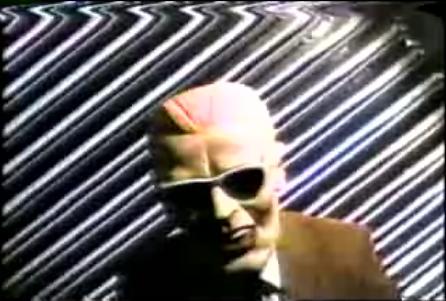
Standing in front of a moving sheet of corrugated metal was a person wearing a rubber mask.
The mask depicted Max Headroom, the fictional artificial television personality whose distorted face had become one of the most recognizable images of the 1980s.
The figure moved strangely from side to side.
There was no intelligible speech.
A loud buzzing sound accompanied the image.
WGN engineers reacted quickly.
Within roughly half a minute, the station regained control.
Dan Roan returned to television screens across Chicago.
He looked confused.
"So, well, if you're wondering what's happened, so am I."
The incident was bizarre.
But it was over.
Or so everyone thought.
Approximately two hours later, it happened again.
This time, the target was WTTW, Chicago's PBS station.
This time, the intruder remained on the air considerably longer.
This time, there was audio.
And this time, the world received one of the strangest pieces of unauthorized television ever broadcast.
A masked figure appeared against the same moving metallic background.
He laughed.
He screamed.
He moaned.
He made obscure jokes.
He mocked television personalities.
He held up a Pepsi can while referencing Coca-Cola.
He displayed a glove.
He complained about hemorrhoids.
And near the end of the transmission, the person removed part of his costume, bent over, and was repeatedly struck on the exposed backside with a flyswatter by an unidentified accomplice wearing a dress.
Then the screen went black.
Normal programming returned.
The entire second intrusion lasted roughly a minute and a half.
Millions of people would eventually see recordings of it.
Federal investigators became involved.
Broadcast engineers tried to determine how it had been accomplished.
The Federal Communications Commission searched for the people responsible.
Nobody was publicly charged.
Nobody ever credibly claimed responsibility in a way that solved the case.
No definitive technical setup was recovered.
And the person behind the Max Headroom mask was never publicly identified.
More than three decades later, the incident remains one of the most famous unsolved broadcast intrusions in television history.
The recording survives.
The voice survives.
The mask survives.
The identity behind it does not.
Max Headroom
To understand why someone chose the mask, it helps to understand what Max Headroom represented in 1987.
Max Headroom was a fictional television personality portrayed by actor Matt Frewer.
The character had the appearance of a computer-generated human being, although Frewer's performance relied heavily on makeup, prosthetics and visual effects.
Max had a sculpted face.
Sunglasses.
A suit.
A stuttering, electronically distorted delivery.
Behind him appeared shifting geometric patterns and computer-generated environments.
The character was intentionally artificial.
He was a parody of television.
A television personality who seemed to have been created by television itself.
Max Headroom became a cultural phenomenon.
He appeared in television programs.
Advertisements.
Music videos.
Promotional campaigns.
Coca-Cola commercials.
His face was unmistakable.
For someone planning to illegally seize control of a television broadcast, there could hardly have been a more appropriate disguise.
A fictional television host was about to interrupt actual television.
The Name "Max Headroom"
The character's strange name came from the phrase "MAX. HEADROOM," a warning indicating maximum vehicle height.
Within the fictional universe, the character emerged following an accident involving such a sign.
By 1987, however, viewers did not need the backstory.
They recognized the face.
The exaggerated chin.
The hair.
The sunglasses.
The artificial smile.
When Chicago viewers suddenly saw someone wearing a crude Max Headroom mask appear in the middle of a legitimate broadcast, the joke was immediately recognizable.
Someone was parodying television while simultaneously taking control of it.
Sunday Night in Chicago
November 22, 1987, was a Sunday.
Television still occupied a very different place in American life than it does today.
There was no YouTube.
No streaming video.
No social media.
No viral TikTok clip waiting to compete for attention.
Broadcast television was centralized.
A relatively small number of stations transmitted programming to enormous local audiences.
If someone wanted to put an unauthorized message in front of thousands—or potentially hundreds of thousands—of people simultaneously, hijacking a television signal was one of the most dramatic methods imaginable.
It was also illegal.
And technically difficult.
The people behind the Max Headroom incident somehow managed to do it twice in one night.
The First Target: WGN-TV
The first intrusion occurred during WGN-TV's The Nine O'Clock News.
WGN was one of Chicago's best-known television stations.
The station's call letters originally reflected the slogan of the Chicago Tribune:
"World's Greatest Newspaper."
At approximately 9:14 p.m., sports anchor Dan Roan was presenting highlights from the Chicago Bears' game against the Detroit Lions.
Nothing unusual was expected.
Then WGN's signal was interrupted.
The legitimate broadcast disappeared.
Static or darkness briefly replaced it.
Then came the face.
The First Appearance
The pirate transmission showed a person wearing a Max Headroom mask and sunglasses.
Behind the figure was a moving background resembling corrugated metal.
The effect mimicked the shifting geometric background associated with the real Max Headroom character.
But this version looked cheap.
Homemade.
Unstable.
The masked person rocked from side to side.
The video itself was strange enough.
The audio made it more unsettling.
Instead of understandable speech, viewers heard a loud buzzing or droning sound.
Whatever message the intruder may have intended during the first transmission was lost.
For roughly thirty seconds, an unknown person controlled part of a major Chicago television broadcast.
Then WGN engineers defeated the intrusion.
WGN Takes Back the Signal
The station's engineers responded quickly.
The unauthorized transmission disappeared.
Dan Roan returned.
The sports segment resumed.
Roan reacted with understandable confusion.
The interruption had happened without warning.
From the studio's perspective, something had just interfered with their transmission infrastructure.
This was not a prerecorded joke inserted by WGN.
It was not part of the news program.
Someone outside the station had interfered with the broadcast.
That realization immediately made the event much more serious.
"If You're Wondering What's Happened..."
Roan's reaction became part of the historical record because it demonstrated how unexpected the intrusion was.
He acknowledged that he did not know what had happened.
Then the broadcast continued.
The station had recovered quickly.
Engineers had stopped the unauthorized signal.
The intruder had achieved perhaps thirty seconds of airtime.
It might have ended there as an obscure local television incident.
But the person behind the mask apparently was not finished.
Two Hours Later
Approximately two hours after the WGN intrusion, Chicago viewers watching another station experienced something even stranger.
The second target was WTTW.
WTTW was a PBS member station.
At the time of the intrusion, it was broadcasting an episode of Doctor Who.
The serial was Horror of Fang Rock, featuring Tom Baker as the Fourth Doctor.
The legitimate program suddenly vanished.
And the Max Headroom impersonator returned.
The Second Hijacking
At approximately 11:15 p.m., the WTTW signal was overtaken.
The picture changed.
The same masked person appeared.
The same bizarre moving background was visible.
But unlike the first intrusion, the audio now worked.
The person spoke.
For approximately ninety seconds, viewers were subjected to an intentionally chaotic performance.
The intruder's voice was distorted.
Some statements were difficult to understand.
Others were clear enough to become endlessly analyzed.
The result was not a coherent manifesto.
There was no political demand.
No obvious extortion attempt.
No ideological declaration.
No explanation of who the intruders were.
Instead, the broadcast was absurd.
Mocking.
Sexual.
Juvenile.
Aggressive.
And deeply strange.
The Masked Man Speaks
The figure laughed and made exaggerated noises.
His voice rose and fell theatrically.
At different moments he seemed to be performing an imitation of Max Headroom.
At others, he appeared simply to be improvising.
He referenced television personalities.
He made comments that seemed directed toward WGN.
He mentioned Chuck Swirsky, a Chicago sports broadcaster.
He mocked corporate advertising.
He held up objects.
He sang fragments.
He screamed.
The performance seemed designed less to communicate a message than to create confusion.
"He's a Freaking Nerd"
One of the statements commonly associated with the transmission was a mocking reference to sportscaster Chuck Swirsky.
Swirsky worked for WGN radio and television during the period.
Why the intruder mentioned him remains unknown.
Was there a personal grudge?
An inside joke?
Was the perpetrator simply choosing recognizable local television personalities?
Nobody knows.
This is one of the frustrating aspects of the recording.
The intruder provides clues.
But the clues may be meaningless.
The Coca-Cola Joke
The real Max Headroom was strongly associated with Coca-Cola advertising.
That made one moment in the intrusion particularly deliberate.
The masked figure held up a Pepsi can.
The joke was obvious.
Max Headroom represented Coke.
The fake Max displayed Pepsi.
It was parody layered on top of parody.
The intruder clearly understood the Max Headroom character and the advertising campaign surrounding him.
This was not a random rubber mask selected at the last minute.
The character was part of the performance.
"Catch the Wave"
The phrase "Catch the Wave" was associated with Coca-Cola's Max Headroom advertising campaign.
The pirate referenced the campaign while displaying the rival Pepsi brand.
Again, the broadcast appeared to mock commercial television itself.
Whether this reflected genuine anti-corporate sentiment or simply juvenile humor is impossible to determine.
There was no accompanying manifesto explaining the joke.
The Glove
At another point, the intruder displayed a glove or glove-like object.
He made a remark associated with it and tossed it away.
The exact meaning has never been established.
Some viewers have tried to interpret nearly every prop as a coded clue.
That may be a mistake.
The performance could simply have been deliberately nonsensical.
Absurdity may have been the entire objective.
The Background
One of the most recognizable elements of the intrusion was the moving background.
It looked like a rotating or oscillating sheet of corrugated metal.
The effect imitated the graphical backgrounds used with the real Max Headroom.
But the pirate version was physical rather than sophisticated.
Investigators and later viewers have speculated about exactly how it was constructed.
A sheet of corrugated metal may have been moved or rotated manually.
The setup suggests preparation.
Someone had built a set.
Someone had obtained the mask.
Someone had arranged a camera.
Someone had created audio.
Someone had access to transmission equipment.
The hijacking was not an impulsive prank performed with a home television.
The Camera
The footage appears to have been produced using ordinary video equipment available in the late 1980s.
That part would not have been especially difficult.
Consumer and semi-professional video cameras were widely available.
The difficult part was not recording the masked figure.
It was getting that recording onto the air.
Twice.
The Second Intrusion Continues
The masked performer grew increasingly chaotic.
He shouted.
He laughed.
He moved erratically.
He made references whose meanings remain obscure.
Then the performance took an even stranger turn.
The camera angle changed.
The Max Headroom mask came off or was moved out of view.
The person turned around.
His exposed backside faced the camera.
Another figure appeared.
The Flyswatter
An accomplice wearing what appeared to be a dress entered the scene.
The masked performer bent forward.
The accomplice repeatedly struck his exposed backside with a flyswatter.
The performer screamed.
The sequence was deliberately ridiculous.
It also demonstrated something important.
There was almost certainly more than one person involved in producing the second transmission.
One person appeared on camera.
Another participated in the final scene.
Additional people may have operated the camera, playback equipment or transmitter.
The Max Headroom hijacking was probably not the work of a lone prankster acting entirely by himself.
Then It Ended
The pirate transmission abruptly stopped.
Doctor Who returned.
The hijackers were gone.
They would never publicly return in any confirmed incident.
The entire performance had lasted only about ninety seconds.
But those ninety seconds became one of the most famous unsolved moments in television history.
Why WTTW Could Not Stop It
The difference between the two intrusions was crucial.
WGN had been able to regain control relatively quickly.
WTTW could not.
According to accounts from the period, engineers at WTTW lacked an engineer immediately available at the relevant transmitter location who could simply override the incoming unauthorized signal.
The station therefore had to wait.
For the duration of the pirate transmission, the intruders effectively controlled what WTTW viewers saw.
This suggests the perpetrators had learned something important.
Whether by planning or coincidence, their second target was more vulnerable.
How Do You Hijack a Television Station?
The Max Headroom incident is sometimes described as though the perpetrators hacked into a computer.
That is misleading.
This was 1987.
The likely attack was not a modern network intrusion.
It was a radio-frequency attack against the station's broadcast infrastructure.
Television stations often transmitted programming from a studio to a separate broadcast transmitter.
The connection between those locations could involve a microwave studio-to-transmitter link.
If an attacker could transmit a stronger signal on the appropriate frequency toward the receiving equipment, the legitimate feed could potentially be overwhelmed.
The principle is straightforward.
Executing it successfully is not.
The Studio-to-Transmitter Link
A television studio does not necessarily sit directly beneath the tower broadcasting its signal to viewers.
Programming must first reach the transmitter.
In the 1980s, microwave links were commonly used for this purpose.
A directional microwave signal carried the station's programming from the studio toward the transmitter.
At the transmitter site, receiving equipment accepted that signal and fed it into the broadcast chain.
The Max Headroom intruders appear to have attacked this link.
Instead of overpowering the final television transmitter broadcasting across Chicago, they likely inserted their own video upstream.
Overpowering the Legitimate Feed
Radio receivers generally respond to the strongest suitable signal reaching them.
If an unauthorized transmitter sends a sufficiently powerful signal on the same frequency as the legitimate microwave link, and if that signal is aimed properly at the receiving antenna, it may overwhelm the legitimate source.
The station's transmitter then rebroadcasts the pirate material.
To viewers at home, it appears that the television station itself has suddenly changed programming.
That is essentially what Chicago experienced.
Why This Was Difficult
The attacker needed more than a Max Headroom mask.
They likely needed knowledge of broadcast engineering.
They needed to know or determine the relevant microwave frequencies.
They needed suitable transmitting equipment.
They needed an antenna.
They needed enough power.
They needed a location with a viable path toward the receiving site.
They needed video equipment.
And they needed to execute the operation without immediately being located.
Doing this once would have been impressive.
Doing it twice against different stations in the same night demonstrated significant technical competence.
Was It an Inside Job?
One obvious theory is that someone involved worked in television or broadcast engineering.
The technical knowledge required has always encouraged speculation that the perpetrators had industry experience.
Possibilities include:
a television engineer,
a former station employee,
a broadcast technician,
an amateur-radio operator,
an electronics enthusiast,
or someone working in related communications technology.
But technical competence does not prove insider access.
A knowledgeable hobbyist could understand microwave broadcasting.
Technical publications existed.
Equipment could be obtained.
People experimented extensively with radio systems during the period.
The perpetrators may have been outsiders who simply knew exactly what they were doing.
The Equipment
One of the central questions is what equipment was required.
Accounts differ in their estimates.
The intruders would have needed hardware capable of generating a microwave signal strong enough to dominate the legitimate studio-to-transmitter feed.
That sounds exotic.
But broadcast and communications equipment existed on the commercial and surplus markets.
A determined person with electronics expertise could potentially modify existing hardware.
The challenge was assembling the complete system and using it correctly.
A Directional Antenna
Microwave communications rely heavily on directional transmission.
The attacker did not necessarily need to flood Chicago with an enormous signal.
They needed to place sufficient energy into the station's receiving antenna.
A properly aimed directional antenna dramatically reduces the power required compared with broadcasting in every direction.
This makes a portable or semi-portable attack more plausible.
Where Were the Hijackers?
This question has never been conclusively answered.
They needed a location capable of reaching the relevant microwave receiving infrastructure.
That could potentially mean a rooftop.
A high-rise building.
A parking structure.
An elevated location.
A vehicle positioned with suitable line of sight.
Or another site with favorable geometry.
Chicago's urban environment offered numerous possibilities.
The exact transmission location was never publicly established.
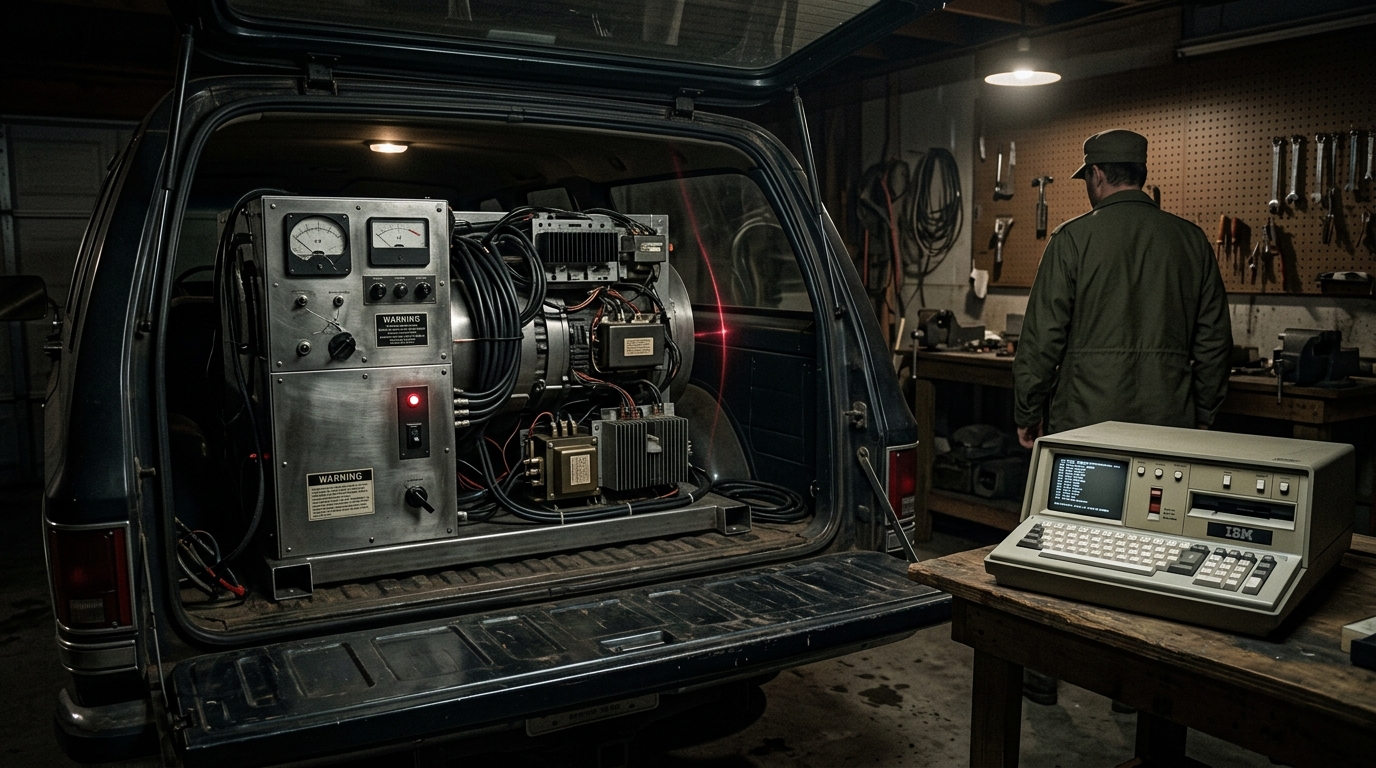
Could They Have Used a Van?
The image of hackers operating from a van has become part of the mythology.
Technically, mobile equipment could have been involved.
A vehicle would provide several advantages.
Equipment could be transported easily.
Power could be supplied.
The operators could leave quickly.
But there is no confirmed evidence proving that a van was used.
It remains speculation.
The First Attack May Have Been a Test
One intriguing possibility is that the WGN intrusion functioned partly as a test.
The attackers succeeded in inserting their video.
But the audio failed or was unusable.
WGN engineers then regained control.
Approximately two hours later, the perpetrators tried again.
The second transmission included working audio.
It lasted much longer.
Was that because they corrected a technical problem after the first attempt?
Possibly.
If so, the perpetrators may have been monitoring their own broadcast.
They would have known what viewers saw.
They could have adjusted their setup.
But there is no surviving confession confirming this.
Why WGN?
The first target may not have been random.
The pirate repeatedly referenced WGN-related personalities during the second intrusion.
The station's call letters themselves may even have been part of the joke.
The real Max Headroom was a television personality.
The intruder appeared interested in mocking television personalities.
Perhaps WGN was specifically chosen because someone involved disliked the station or knew its operations.
Or perhaps it simply presented a technically convenient target.
The motive remains unknown.
Why WTTW?
The choice of WTTW is equally interesting.
Was the PBS station selected because its microwave link was vulnerable?
Because the perpetrators knew engineers would have difficulty overriding the signal?
Because they wanted to interrupt Doctor Who?
Because the station was nearby?
Or simply because they wanted a second target?
There is no definitive answer.
Why Doctor Who?
The interruption of Doctor Who has given the incident an additional layer of cult status.
A bizarre masked television pirate interrupting a science-fiction program feels almost too perfect.
But there is no strong evidence that Doctor Who itself was the intended target.
The timing may have been coincidental.
If the attackers were targeting WTTW's technical infrastructure rather than a specific program, they may not have cared what was airing.
Still, the combination ensured that the incident would be remembered by exactly the sort of audience likely to appreciate surreal technological weirdness.
The FCC Gets Involved
Broadcast signal interference is not merely a prank.
It can violate federal law.
The Federal Communications Commission became involved in investigating the incident.
The hijacking represented unauthorized use of radio frequencies and interference with licensed broadcasting.
Federal investigators wanted to identify the source.
They faced a major problem.
The broadcasts were short.
The perpetrators disappeared.
Direction Finding
Locating an unauthorized radio transmitter is possible.
Investigators can use direction-finding equipment.
Multiple measurements can triangulate a source.
But the transmitter must remain active long enough for investigators to detect and locate it.
The Max Headroom intrusions lasted roughly thirty seconds and ninety seconds.
By the time authorities could respond, the signal was gone.
The attackers never publicly repeated the stunt.
That made radio-direction finding extraordinarily difficult.
They Knew When to Stop
Whether intentionally or not, the brevity of the transmissions protected the perpetrators.
A pirate broadcaster operating continuously can eventually be found.
An antenna emits a signal.
Investigators track it.
A transmitter operating for less than two minutes presents a very different problem.
The Max Headroom perpetrators appeared.
They transmitted.
They disappeared.
No prolonged signal remained to follow.
The Investigation
FCC investigators examined the case.
Broadcast personnel were interviewed.
Engineers attempted to understand the intrusion.
The technical characteristics of the attack were studied.
Authorities reportedly believed the perpetrators had significant technical knowledge.
But no arrest followed.
No transmitter was publicly recovered.
No suspect was publicly identified as the person behind the mask.
The case went cold.
Possible Penalties
The perpetrators risked serious consequences.
Unauthorized interference with broadcast communications could result in substantial fines and criminal prosecution.
The stunt may look harmless decades later because nobody was physically injured.
But from the government's perspective, someone had demonstrated an ability to seize control of licensed television transmissions in one of America's largest cities.
That had obvious implications beyond comedy.
What If the Message Had Been Different?
Imagine the same technical capability used for another purpose.
A false emergency warning.
A fabricated military announcement.
A political message.
A financial scam.
A threat.
False instructions during a disaster.
The Max Headroom broadcast was absurd.
The underlying vulnerability was serious.
Someone outside the television stations had demonstrated the ability to put unauthorized material onto the air.
The Cold War Context
The incident occurred during the final years of the Cold War.
Broadcast infrastructure was part of national communications systems.
Concerns about emergency broadcasting and information warfare were real.
A person wearing a rubber mask and screaming nonsense was embarrassing.
But the technical breach represented something more important.
A communications system assumed to be controlled by licensed broadcasters had been successfully manipulated.
Broadcast Intrusions Before Max Headroom
The Chicago incident was not the first unauthorized broadcast intrusion.
Other television and radio systems had been interfered with before 1987.
One of the most famous earlier incidents occurred in Britain in 1977.
During a Southern Television broadcast, an unknown voice interrupted the audio and delivered a strange message claiming to represent an extraterrestrial organization.
That incident became known as the Vrillon broadcast or Southern Television interruption.
Its authenticity as an unauthorized transmitter event is well established even though the identity of the perpetrator remains unknown.
But the Max Headroom incident was visually far more dramatic.
The perpetrators inserted both video and audio.
Captain Midnight
Another major American broadcast intrusion occurred only a year before Max Headroom.
On April 27, 1986, HBO's satellite signal was interrupted.
Viewers saw a text message from someone identifying himself as Captain Midnight.
The message protested HBO's pricing policies for satellite-dish owners.
Unlike the Max Headroom case, Captain Midnight was eventually identified.
The perpetrator was satellite engineer John R. MacDougall.
His capture demonstrated something important.
Broadcast pirates could be found.
But they were not always found.
Captain Midnight Versus Max Headroom
The two incidents are often grouped together, but they were technically and stylistically different.
Captain Midnight delivered a clear message.
He had a recognizable grievance.
Investigators eventually traced him.
Max Headroom delivered chaos.
There was no obvious demand.
No clear ideology.
No public claim of responsibility.
No repeat performance.
That absence of motive made the Chicago case much harder to investigate.
Was There a Message Hidden in the Nonsense?
For decades, viewers have tried to decode the transmission.
Maybe the apparently random statements contain clues.
Maybe the references identify the perpetrators.
Maybe the dialogue contains a personal grievance.
Maybe it was aimed at specific WGN employees.
Maybe it was anti-corporate satire.
Maybe it was commentary on television culture.
Or maybe it was simply designed to be stupid.
The final possibility should not be underestimated.
Young technically skilled pranksters do not necessarily require a coherent philosophy.
The absurdity may have been the point.
The Performance Style
The masked figure behaved in a deliberately exaggerated way.
He twisted his body.
Moved his head.
Changed his voice.
Laughed.
Screamed.
The performance resembled a mixture of:
punk prank culture,
video art,
television parody,
inside jokes,
and adolescent shock humor.
It does not resemble someone carefully delivering a political manifesto.
That may offer a clue about the perpetrators.
They were technologically sophisticated.
But their humor was intentionally juvenile.
The Voice
Could the voice identify the intruder?
Potentially.
The recording contains speech.
Someone who personally knew the performer might recognize vocal patterns.
But the voice is distorted by the mask, performance style and broadcast quality.
The speaker intentionally alters his delivery.
No publicly accepted voice identification has solved the case.
Modern audio processing can clarify portions of the recording.
It cannot magically produce an identity.
Could Facial Analysis Identify Him?
The face is covered.
That is the obvious obstacle.
Researchers can examine:
height,
body proportions,
movement,
hands,
skin tone,
hair that may be visible,
and other physical characteristics.
But these features are too generic to establish identity.
The Max Headroom mask performed its job extremely well.
It transformed a person into a character.
The Accomplice
The second person seen near the end of the WTTW broadcast may be one of the most overlooked clues.
The accomplice appears briefly and participates in the flyswatter sequence.
This means at least two people knew about the stunt.
Possibly more.
Every additional participant increases the chance that someone eventually talks.
Yet no universally accepted confession has emerged.
That silence has helped keep the mystery alive.
How Many People Were Involved?
At minimum, the visible evidence suggests two.
But a larger team is plausible.
One performer.
One accomplice.
Someone operating the camera.
Someone managing playback.
Someone controlling microwave transmission equipment.
Someone monitoring television broadcasts.
Those roles could overlap.
A small group of technically competent friends could perform them.
There is no need to imagine a large organization.
The Set
The homemade set provides another clue.
The perpetrators needed privacy.
They needed enough space for a person to stand in front of the moving background.
They needed lighting.
They needed a camera.
They needed props.
This could have been assembled in:
an apartment,
a basement,
a garage,
a studio,
a workshop,
or an industrial space.
If the transmission equipment was located elsewhere, the performance may have been prerecorded.
Was the Performance Live?
This is an important technical question.
The masked performance did not necessarily occur live at the moment viewers saw it.
The intruders could have prerecorded the segment onto videotape.
They then only needed to feed the recording into their transmission system during the hijacking.
This would greatly simplify the operation.
The performers could rehearse.
The video could be prepared in advance.
The transmission crew could focus entirely on the microwave attack.
A prerecorded tape is therefore highly plausible.
Evidence of Preparation
Several features suggest planning.
The mask.
The sunglasses.
The moving background.
The Pepsi prop.
The glove.
The flyswatter sequence.
The second costume.
The distorted performance.
The references to television personalities.
The perpetrators had thought about what viewers would see.
Even if the dialogue was improvised, the visual concept was prepared.
The Max Headroom Mask
Rubber celebrity and character masks were commercially available.
Obtaining a Max Headroom mask would not itself have been difficult.
But choosing it was brilliant.
The mask concealed identity.
It provided immediate cultural recognition.
It transformed technical sabotage into performance art.
And it gave the incident a name.
If the perpetrator had worn a generic ski mask, the event might now be remembered as the Chicago television hijacking.
Instead, it became the Max Headroom incident.
Was It Performance Art?
Some people interpret the intrusion as unauthorized performance art.
There is something compelling about that description.
The medium was part of the message.
The intruders did not merely make a strange video.
They forced television stations to broadcast it.
The act of taking control was itself the performance.
Max Headroom—a fictional symbol of artificial television—appeared inside real television without permission.
Commercial advertising was mocked.
Broadcasters were mocked.
The audience's expectation of passive television consumption was violated.
Whether the perpetrators thought about it in those terms is unknown.
Was It Hacker Culture?
The incident is frequently called a hack.
In the broad cultural sense, that works.
Someone understood a technological system and manipulated it in a way its operators did not intend.
But it was not computer hacking in the modern sense.
It was closer to radio engineering.
Signal piracy.
Electronic intrusion.
The perpetrators attacked infrastructure physically through electromagnetic transmission.
The Hacker Without a Computer
This is part of what makes the case fascinating today.
Modern audiences associate hacking with laptops, networks and software.
The Max Headroom perpetrators may have needed none of those things.
Their tools were likely:
transmitters,
antennas,
microwave equipment,
video hardware,
cables,
and knowledge.
They hacked television using radio waves.
Amateur Radio Operators
Chicago had a substantial community of amateur-radio enthusiasts and electronics hobbyists.
Many technically skilled hobbyists understood antennas, frequencies, transmitters and signal propagation.
This expanded the suspect pool enormously.
The perpetrators did not necessarily need professional television credentials.
They may have been talented amateurs.
Could the FCC Have Checked Radio Hobbyists?
Investigators could examine people known to possess suitable equipment or expertise.
But expertise alone is not evidence.
Thousands of people could understand the underlying technology.
Identifying someone who both had the knowledge and actually committed the intrusion required more.
Equipment.
Witnesses.
A confession.
Physical evidence.
The investigation apparently never obtained enough.
The Statute of Limitations
As the years passed, practical possibilities for prosecution diminished.
Even if someone eventually admitted involvement, the historical significance would now likely exceed the criminal significance.
The central question today is no longer punishment.
It is identity.
Who was behind the mask?
The Internet Revives the Mystery
For years, the incident survived largely through videotape recordings, broadcast-history communities and people who remembered seeing it.
Then the internet changed everything.
Copies of the WTTW intrusion were digitized.
The footage spread.
YouTube introduced it to millions of people who had not been alive in 1987.
The incident became internet folklore.
A new generation began investigating.
Why It Works So Well Online
The Max Headroom intrusion seems almost designed for internet culture.
It is short.
Visually bizarre.
Authentic.
Unsolved.
Creepy without being horrific.
Funny without being understandable.
It contains a masked stranger.
An analog television aesthetic.
Technical mystery.
An unknown motive.
And a definitive date and location.
Unlike fictional "found footage," it actually happened.
That authenticity gives the recording unusual power.
The Analog Horror Connection
Long before analog horror became an internet genre, the Max Headroom incident contained many of its defining visual features.
Degraded video.
Broadcast interruption.
Distorted audio.
A strange human face.
Unclear motives.
A familiar television format becoming hostile.
A sense that someone has taken control of a trusted communication system.
Modern analog horror deliberately recreates this atmosphere.
The Max Headroom incident produced it accidentally—or perhaps intentionally—in 1987.
Why the Footage Feels Disturbing
Nothing truly terrifying happens in the video.
There is no murder.
No monster.
No threat.
No weapon.
Yet many viewers find it deeply unsettling.
Part of that comes from context.
Television broadcasts are expected to be controlled.
The station logo, presenter and scheduled program create a sense of authority.
Then that authority disappears.
A masked stranger appears.
Nobody explains why.
The viewer realizes that the people operating the station have temporarily lost control.
The psychological boundary between broadcaster and outsider has been broken.
The Uncanny Mask
The Max Headroom mask adds another layer.
Human faces carry enormous social information.
A mask removes it.
The fake face smiles permanently.
The performer moves underneath it.
The mouth does not behave naturally.
The sunglasses hide the eyes.
The result resembles a human without functioning like one.
That visual uncanniness is amplified by degraded analog video.
The Moving Metal Background
The background may be almost as important as the mask.
It creates constant visual instability.
Nothing remains still.
The lines shift.
Light reflects.
The figure moves against it.
The viewer cannot settle visually.
The cheap imitation of Max Headroom's digital environment becomes more disturbing than a polished version would have been.
Internet Sleuths
Online communities eventually began trying to solve the case.
Users analyzed the voice.
The props.
The technical requirements.
Chicago geography.
Broadcast infrastructure.
Potential suspects.
The meaning of individual phrases.
Some theories became elaborate.
Most lacked decisive evidence.
The Reddit Investigation
One of the most famous modern developments involved an online account from someone who claimed to have known people who might have been responsible.
The story circulated widely and became one of the most discussed suspect theories.
It described two brothers or acquaintances with technical interests who allegedly possessed characteristics matching aspects of the intrusion.
For a time, many readers believed the mystery might finally have a plausible solution.
But the theory never produced enough independently verified evidence to identify the perpetrators conclusively.
The names proposed in internet investigations should therefore not be treated as established culprits.
The Danger of Naming Suspects
Unsolved cases attract speculation.
That creates a serious problem.
A person can be accused online because:
they lived nearby,
worked in electronics,
liked Max Headroom,
had an unusual voice,
or knew someone in broadcasting.
Those facts do not establish guilt.
Without documentary evidence, a confession or strong corroboration, identifying private individuals as perpetrators would be irresponsible.
The Max Headroom case remains officially unresolved.
Could the Perpetrators Still Be Alive?
Almost certainly possible.
If the people involved were young adults in 1987, they could easily still be alive today.
Even someone who was thirty years old would now be under seventy.
The mystery therefore differs from nineteenth-century cases where every witness is long dead.
Someone may still know the answer.
The person behind the mask may still know that millions of people have watched the footage.
Why Has Nobody Confessed?
Perhaps someone has privately.
Perhaps the perpetrators told friends who never went public.
Perhaps one of the internet stories contains part of the truth.
Perhaps the people involved agreed never to discuss it.
Perhaps they feared legal consequences for years and later preferred anonymity.
Perhaps the mystery became more satisfying than recognition.
Or perhaps credible confessions have been lost among false ones.
There is no way to know.
The Perfect Crime?
Calling it a perfect crime would exaggerate the offense.
But from an anonymity standpoint, the operation was remarkably successful.
The perpetrators:
concealed their faces,
used short transmissions,
apparently avoided easily traceable identification,
did not publicly claim credit,
did not repeat the stunt,
and left behind little physical evidence accessible to investigators.
The result was a highly visible act committed in front of thousands of witnesses by people nobody could identify.
Why They Probably Stopped
Repeating the attack would have dramatically increased the risk of capture.
After November 22, engineers and federal authorities knew the vulnerability existed.
Monitoring could be increased.
Direction-finding equipment could be prepared.
Stations could alter procedures.
A third attempt might have given investigators exactly the opportunity they needed.
If the perpetrators understood radio engineering well enough to execute the attack, they likely understood this.
Two successful intrusions may have been enough.
Did They Plan Both From the Beginning?
Possibly.
The first WGN attack and second WTTW attack occurred too close together to look completely unrelated.
The same character and visual setup appeared.
The perpetrators clearly had a plan for multiple targets or adapted very quickly after the first.
The second video segment may have been prepared before the evening began.
That would suggest the two attacks were always intended as part of one operation.
The Audio Failure
Why did the first intrusion lack intelligible audio while the second had it?
Technical configuration is the most obvious explanation.
Perhaps the first transmission did not properly inject the audio carrier.
Perhaps levels were incorrect.
Perhaps equipment was configured differently.
Perhaps WGN's system responded differently.
The perpetrators may have corrected the problem before attacking WTTW.
The difference potentially reveals that they were actively troubleshooting.
What Did They Know About WTTW?
WTTW's inability to immediately override the second intrusion raises an intriguing question.
Did the perpetrators know that?
If so, someone involved may have possessed specific knowledge of station engineering.
If not, they simply got lucky.
There is no public evidence proving advance knowledge.
But the second attack's greater success has fueled insider theories for decades.
Could Station Employees Have Done It?
An employee or former employee would have advantages.
Knowledge of microwave frequencies.
Knowledge of transmitter locations.
Knowledge of engineering procedures.
Potential access to equipment.
Understanding of vulnerabilities.
But an insider would also face risks.
Investigators would naturally examine people with such knowledge.
No station employee was publicly established as responsible.
Could Equipment Have Been Stolen?
Possible.
Broadcast hardware was expensive.
Surplus equipment existed.
Parts could be modified.
The intruders may have had legitimate access through employment.
Without the actual transmitter being recovered, its origin cannot be determined.
Why No Physical Evidence?
Because investigators apparently never located the transmission site.
If the equipment had been found, the case might have been solved immediately.
Serial numbers.
Fingerprints.
Rental records.
Vehicle information.
Technical modifications.
Videotapes.
All could potentially identify perpetrators.
Instead, the crucial hardware disappeared with them.
The Original Tape
The pirate segment itself was presumably recorded before or during the transmission.
Somewhere in 1987 there may have been a master tape with better image and sound quality than the broadcast recordings.
If that tape still exists, it could potentially reveal additional detail.
It might contain footage before or after the transmitted segment.
Voices.
Room sounds.
Unmasked participants.
Production mistakes.
No authenticated original production tape has publicly surfaced.
Could Modern Technology Solve It?
Potentially, but there are limits.
Modern audio tools could improve speech intelligibility.
Video processing could stabilize frames.
Background details could be examined.
Body measurements could be estimated.
Broadcast engineering could be reconstructed more precisely.
But technology cannot recover information that was never captured.
The mask hides the face.
The recording is low resolution.
The background reveals little.
There is no license plate hiding in the pixels waiting to be enhanced.
The biggest missing evidence is historical, not computational.
Voice Recognition
Modern voice analysis might compare the intruder with a specific known suspect.
But without a reliable suspect sample from a similar period, results would be uncertain.
The performer intentionally changes his voice.
The mask affects acoustics.
The recording chain introduces distortion.
The transmission introduces additional degradation.
Any identification would require strong corroboration.
Background Noise
Researchers have listened for environmental clues.
Machinery.
Traffic.
Room reverberation.
Other voices.
Electrical hum.
Anything capable of identifying the recording location.
The surviving audio has not produced a publicly accepted breakthrough.
The loud performance and broadcast distortion obscure subtle sounds.
The Props as Evidence
The Pepsi can, glove, flyswatter and other objects could theoretically provide clues.
Where were they purchased?
Were they common?
Did they reference private jokes?
Unfortunately, they are generic objects.
Without the originals, forensic examination is impossible.
Their greatest value is interpretive rather than forensic.
They tell us something about the humor.
Not necessarily the identity.
The Humor May Be the Best Psychological Clue
The perpetrators appear to have shared a very particular style of humor.
Media parody.
Local television references.
Corporate-brand jokes.
Sexual humiliation.
Nonsense.
Science-fiction imagery.
Technological showmanship.
That combination suggests a social group rather than a random criminal enterprise.
The attack feels like something created by people trying to make each other laugh.
That is an impression.
Not proof.
No Demand for Money
There was no ransom.
No attempt to extort the stations.
No financial demand.
No advertisement for a business.
No obvious attempt to profit.
This makes ordinary criminal motives unlikely.
The reward appears to have been the act itself.
They wanted to do it because they could.
No Political Manifesto
There was also no coherent political message.
Pirate broadcasters often use unauthorized transmissions to promote causes.
The Max Headroom intruders did not.
There are hints of mockery toward commercial media and advertising.
But nothing resembling a serious ideological statement.
The transmission is much closer to a prank than propaganda.
No Attempt at Fame
Perhaps the strangest feature is that nobody convincingly took credit.
People commit elaborate public stunts because they want recognition.
The Max Headroom perpetrators achieved something technically impressive and culturally unforgettable.
Then they disappeared.
The mystery itself became famous.
The people responsible did not.
Maybe That Was the Point
An anonymous intrusion has a different power than a signed one.
If the broadcast had ended with a name, the mystery would vanish.
Instead, the masked figure simply disappeared.
The anonymity became part of the performance.
Whether intentional or accidental, it was extraordinarily effective.
The Event Becomes Legend
Over time, the incident escaped broadcast-history circles and became something closer to modern folklore.
People who never saw it live discovered copies online.
Stories exaggerated details.
Some claimed the intruders were never even suspected.
Others invented technical impossibilities.
The footage was sometimes presented as though it had appeared simultaneously on every television in Chicago.
It did not.
Two specific television stations were successfully interrupted.
The real event is strange enough without embellishment.
What Viewers Actually Experienced
Imagine seeing it without knowing the story.
It is 1987.
You are watching the news.
The signal fails.
A masked man appears.
There is a buzzing noise.
He disappears.
Two hours later, perhaps you are watching Doctor Who.
The program vanishes.
The same man returns.
This time he speaks.
Nobody explains who he is.
He behaves increasingly strangely.
Someone hits him with a flyswatter.
Then your program resumes.
There is no internet to check.
No social media.
No immediate viral explanation.
You simply witnessed someone take control of television.
That experience helps explain why the event remained so memorable.
Contemporary News Coverage
Chicago news organizations reported on the intrusions.
The incidents became a local story almost immediately.
Broadcast engineers discussed the technical challenge.
Federal authorities investigated.
The existence of contemporary reporting is important because it separates the Max Headroom case from internet fiction.
There is no question that the broadcast intrusion happened.
The mystery concerns attribution.
This Is Not an Urban Legend
Many stories from the early internet era became detached from their origins.
Some were fictional.
Some were creepypasta.
Some were staged.
The Max Headroom incident is different.
The broadcast was real.
WGN was interrupted.
WTTW was interrupted.
Station personnel reacted.
The FCC investigated.
Contemporary recordings survive.
The event does not need paranormal embellishment.
Its authenticity is what makes it compelling.
No Supernatural Explanation Is Needed
Nothing about the Max Headroom incident requires ghosts, extraterrestrials or unexplained technology.
The perpetrators were almost certainly human beings.
The transmission method is understandable using known broadcast technology.
The mystery is entirely human.
Who planned it?
Who built the equipment?
Who wore the mask?
Who wielded the flyswatter?
Where did they transmit from?
Why did they choose those stations?
And why did they never reveal themselves?
The Technical Mystery Is Solvable in Principle
Unlike many mysteries, the mechanism is not unknowable.
Broadcast engineers understand how such an intrusion could occur.
A sufficiently strong unauthorized microwave signal could overwhelm a studio-to-transmitter link.
The challenge is reconstructing the exact setup used on November 22, 1987.
Without the equipment or perpetrators, that reconstruction remains theoretical.
The Human Mystery Is Harder
Technology explains how.
It does not explain who.
That distinction is important.
The Max Headroom incident is not unresolved because nobody understands radio engineering.
It is unresolved because investigators never connected the transmission to specific people strongly enough to publicly solve the case.
What Is Actually Documented?
Several facts can be established confidently.
On November 22, 1987, WGN-TV's evening news broadcast in Chicago was interrupted by an unauthorized signal.
The intrusion showed a person wearing a Max Headroom mask.
The first intrusion lasted roughly half a minute.
WGN engineers regained control.
Approximately two hours later, WTTW was interrupted during a broadcast of Doctor Who.
The same Max Headroom character appeared.
The second intrusion included intelligible audio.
It lasted roughly ninety seconds.
The intruder made various jokes and references to Chicago television.
A second person participated near the end of the transmission.
The FCC investigated.
No perpetrator was publicly charged.
The identities of the people responsible remain unconfirmed.
What Is Not Established?
The exact transmission location has not been publicly established.
The precise equipment used has not been recovered publicly.
It is not established that the perpetrators worked for WGN or WTTW.
It is not established that they worked professionally in broadcasting.
It is not established that a vehicle was used.
It is not established that Doctor Who was deliberately targeted.
It is not established that the dialogue contained a hidden message.
It is not established that any internet suspect theory correctly identifies the perpetrators.
And it is not established who wore the Max Headroom mask.
What Probably Happened
The broad technical reconstruction is comparatively straightforward.
A small group of people with significant knowledge of radio or broadcast engineering planned a television prank.
They obtained or built equipment capable of transmitting on frequencies used by Chicago television studio-to-transmitter microwave links.
They prepared a video performance featuring someone dressed as Max Headroom.
They created a crude moving background mimicking the character's television appearance.
On the evening of November 22, they positioned their transmitting equipment somewhere capable of reaching the relevant broadcast infrastructure.
At approximately 9:14 p.m., they attacked WGN's link.
Their unauthorized signal temporarily overpowered the legitimate feed.
The video appeared.
The audio did not function properly.
WGN engineers changed their own signal parameters or otherwise regained control.
The attackers stopped.
They then prepared for another attempt.
Approximately two hours later, they targeted WTTW.
This time, the audio worked.
WTTW could not immediately override the unauthorized signal.
The complete prerecorded performance aired.
The perpetrators shut down their transmitter after roughly ninety seconds.
They packed up.
They left.
And they never gave federal investigators enough time to locate the transmission source.
This reconstruction explains the event without requiring exotic technology.
What it cannot provide are names.
Why They Were Never Caught
Several factors probably worked in their favor.
The transmissions were extremely short.
The perpetrators concealed their identities.
The likely microwave equipment was directional.
The attacks occurred only twice.
The transmission site was not immediately located.
The group apparently did not repeat the crime.
No public confession provided investigators with a breakthrough.
And the technological world of 1987 left far fewer digital traces than a comparable operation would today.
There were no smartphone location records.
No ubiquitous security cameras.
No social-media posts.
No cloud accounts.
No automated license-plate networks covering every street.
No searchable purchase history attached to every object.
The perpetrators lived in an era when disappearing after an analog crime was considerably easier.
Why It Would Be Harder Today
A modern version would leave a trail.
Digital cameras record metadata.
Phones report location.
Vehicles pass cameras.
Equipment purchases create records.
Online searches leave traces.
Communications are logged.
Social media creates connections between conspirators.
Modern broadcast systems also use different architectures and security mechanisms.
That does not make intrusion impossible.
It makes anonymity more difficult.
The Max Headroom perpetrators benefited from a technological sweet spot.
Broadcast infrastructure was vulnerable enough to attack.
Society was not yet instrumented enough to easily trace the attackers afterward.
The Most Important Clue
The strongest clue may simply be competence.
Whoever did this understood enough about Chicago broadcast infrastructure to successfully interrupt two stations in one evening.
That narrows the universe somewhat.
The perpetrators were probably not random teenagers who happened to own a video camera.
Someone involved understood RF engineering.
Microwave transmission.
Broadcast frequencies.
Antenna alignment.
Or had access to someone who did.
That knowledge is the closest thing the case has to a fingerprint.
Unfortunately, thousands of technically skilled people could fit that description.
The Motive
The most likely motive is also the least dramatic.
A prank.
An elaborate, technically sophisticated, deeply weird prank.
There is no evidence of financial gain.
No political demand.
No attempt to injure anyone.
No sustained campaign.
No attempt to control emergency communications.
The intruders appear to have wanted one thing:
to interrupt television with something television would never willingly show.
They succeeded.
Why Max Headroom Was the Perfect Choice
The genius of the stunt lies in the character.
Max Headroom was already a parody of television.
He was artificial.
Corporate.
Glitchy.
Self-aware.
A character who existed somewhere between a human presenter and an electronic malfunction.
Then an unauthorized fake Max Headroom appeared inside an actual television malfunction.
The boundary collapsed.
A television parody hijacked television.
Whether the perpetrators intended that as media criticism or simply thought it was funny, the symbolism is almost perfect.
What Would Solve the Case?
At this point, the most likely solution would come from a person rather than technology.
A credible confession.
A surviving participant.
A family member with original materials.
The master videotape.
Photographs of the equipment.
Contemporary notes.
A transmitter.
A receipt.
A diary.
A letter.
Something that can be independently connected to November 22, 1987.
A confession alone would not necessarily be enough.
The case is famous.
False confessions are possible.
A genuine participant should be able to provide details that were never publicly released.
The Missing Master Tape
Perhaps the most tantalizing possibility is that the original video still exists somewhere.
A VHS tape in a box.
A basement.
A garage.
An attic.
A collection inherited by someone who has no idea what it contains.
If the performance was prerecorded, there may once have been footage beyond the ninety seconds viewers saw.
The camera may have started early.
Someone may have spoken off-screen.
The performer may have removed the mask.
The accomplice may have appeared before the take.
If such material survived, it could solve the mystery instantly.
There is no evidence that it has.
But unlike alien spacecraft or vanished ships, the answer to this mystery may literally be sitting on magnetic tape somewhere.
The Possibility of a Future Confession
The perpetrators are likely old enough now that concerns about youthful embarrassment or legal consequences may matter less.
That creates the possibility that someone eventually decides to tell the story.
If that happens, investigators will need to be careful.
A credible confession should explain:
how the WGN link was attacked,
how the WTTW link was attacked,
where the equipment was positioned,
what transmitter was used,
who created the background,
who wore the mask,
who operated the flyswatter,
why the audio failed during the first attempt,
and what the obscure dialogue meant.
Someone who can answer those questions convincingly may finally close the case.
The Strange Longevity of Ninety Seconds
The second hijacking lasted approximately a minute and a half.
That is all.
Less time than many television commercials.
Yet people are still discussing it decades later.
The reason is not merely the weirdness of the footage.
It is the missing ending.
There was never an arrest.
Never a press conference introducing the culprit.
Never a definitive explanation from the perpetrators.
The event simply stops.
The masked figure disappears.
The mystery remains suspended at exactly that moment.
The Case Without the Mythology
Strip away decades of internet speculation and the basic story remains remarkable.
Two licensed television stations in one of America's largest cities lost control of their broadcasts.
The same unauthorized performer appeared during both interruptions.
The second intrusion was recorded clearly enough to survive.
Federal regulators investigated.
The perpetrators escaped identification.
That alone makes the Max Headroom incident historically significant.
Nothing supernatural needs to be added.
Why the Case Belongs in a Documented Archive
The Max Headroom incident represents exactly the distinction between a documented mystery and an urban legend.
The event is documented.
The stations existed.
The broadcasts existed.
The intrusion was recorded.
Contemporary witnesses existed.
The FCC investigated.
The technical mechanism is plausible and understandable.
The unresolved element is narrow but important:
identity.
That is what makes it a genuine mystery.
The Verdict
Status: Unresolved
On November 22, 1987, unidentified perpetrators successfully interrupted two Chicago television stations.
The first attack targeted WGN-TV during its evening news broadcast.
A person wearing a Max Headroom mask appeared for roughly thirty seconds against a moving metallic background while distorted or unintelligible audio played.
WGN engineers regained control.
Approximately two hours later, the perpetrators struck again.
WTTW's broadcast of Doctor Who was interrupted.
The same masked figure appeared.
This time, viewers heard an extended surreal monologue containing local television references, advertising jokes, strange props and deliberately absurd behavior.
Near the end of the transmission, an accomplice appeared and struck the performer with a flyswatter.
Then the unauthorized signal vanished.
The most likely technical explanation involves the perpetrators overpowering microwave studio-to-transmitter links used by the television stations.
Nothing about the incident requires unknown technology.
Someone involved almost certainly possessed substantial knowledge of broadcasting, radio-frequency engineering or microwave communications.
The mystery is not how such an attack could work.
The mystery is who performed it.
The FCC investigated.
No person was publicly charged.
No transmitter was publicly recovered.
No authenticated master tape has surfaced.
No confession has been verified strongly enough to close the case.
Internet investigations have proposed suspects, but none has been established conclusively.
The surviving evidence suggests a small group of technically sophisticated pranksters rather than a lone random vandal.
At least two people appear to have participated in the recorded performance, and additional participants may have operated the video and transmission equipment.
Their motive appears to have been amusement, media parody or the challenge of successfully hijacking a television signal.
Whatever their reason, they accomplished something extraordinary.
For a few minutes on a Sunday night in 1987, the normal rules of television stopped applying.
News anchors and station engineers were no longer deciding what appeared on the screen.
Someone else was.
A masked stranger had found a way inside.
Then, just as quickly, he disappeared.
The engineers recovered their stations.
The FCC began searching.
Chicago television returned to normal.
But nobody ever publicly established who had been standing behind the mask.
Nearly forty years later, the footage remains.
The corrugated metal still moves.
The distorted voice still laughs.
The flyswatter still falls.
The broadcast still ends.
And somewhere behind one of the strangest ninety seconds in television history is a name that has never been confirmed.
For once, the mystery is not whether the recording is authentic.
It is not whether the event really happened.
It is not whether witnesses remembered correctly.
We can watch the mystery happen.
We just don't know who we're watching.
Case Status
Unresolved
The classification above describes the current status of this entry within the Forbidden Lore archive. A documented report does not necessarily establish the explanation offered for it as fact.